
Introduction
A terrace can be more than an unused outdoor area. With the right layout, furniture, lighting, and greenery, it can become a comfortable place for family gatherings, dining, relaxation, or entertaining guests.
Well-planned terrace interior design turns an ordinary space into a functional extension of the home while maintaining its architectural character.
In Dubai, terrace interior design needs to account for strong sunlight, high outdoor temperatures, dust, and changing weather conditions. Choosing suitable materials and planning shade from the beginning can make the space more comfortable and easier to maintain.
The right design also connects the terrace with the rest of your home, creating a consistent and welcoming atmosphere.
What Makes Terrace Interior Design Work in Dubai?
For terrace interior design in Dubai, the most important priorities are comfort, durability, and functionality. A beautiful terrace should offer useful seating, suitable shade, practical flooring, and enough space to move around without obstacles.
These elements help create an outdoor area that supports everyday living rather than serving only as a decorative feature.
Start by considering how the terrace connects to the living room, kitchen, or bedroom. A terrace beside the living room may work well as an outdoor lounge, while one near the kitchen can become a dining area.
The property’s orientation, surrounding buildings, available views, and existing shade should guide the furniture layout and design choices.
Design Ideas for Villas, Townhouses, Apartments, and Enclosed Terraces
Create a Relaxing Villa or Townhouse Terrace
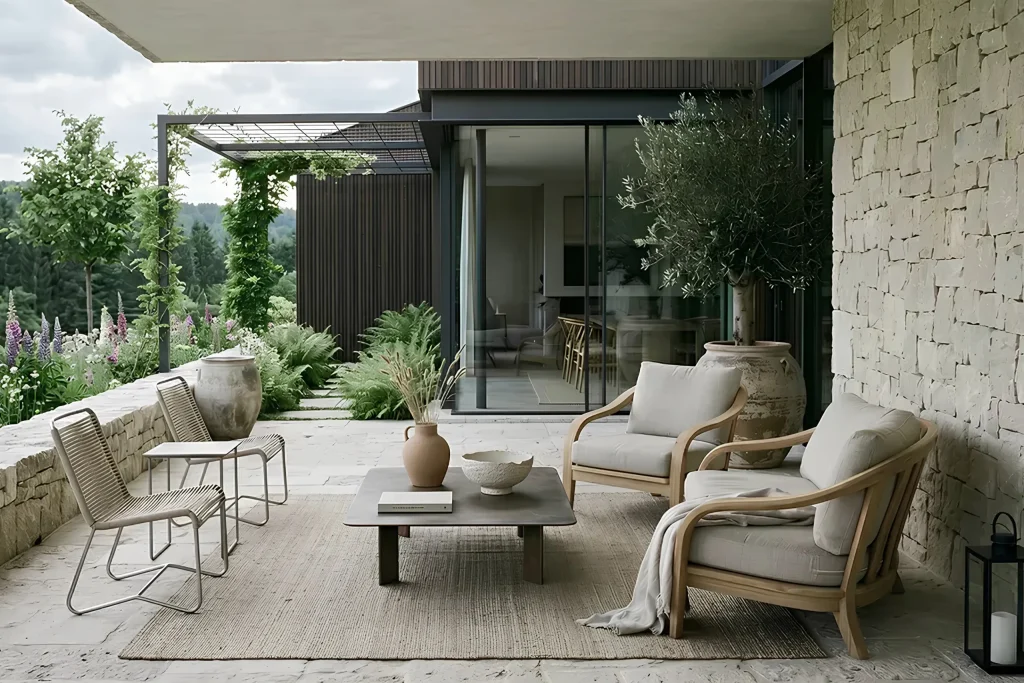
For terrace house interior design, maintain a visual connection between the home’s interior and its outdoor area. You can repeat selected colors, wood finishes, or decorative textures while using furniture made for outdoor conditions.
A spacious villa terrace may accommodate separate dining and lounge areas, whereas a smaller townhouse terrace benefits from fewer, carefully selected pieces.
A double-storey terrace house interior design can give each outdoor area a different purpose. An upper terrace might become a peaceful reading corner, while the ground-level garden terrace provides space for meals and social gatherings.
Consistent flooring tones and coordinated lighting can tie these areas together without making them look identical.
Make Small Apartment Terraces More Useful
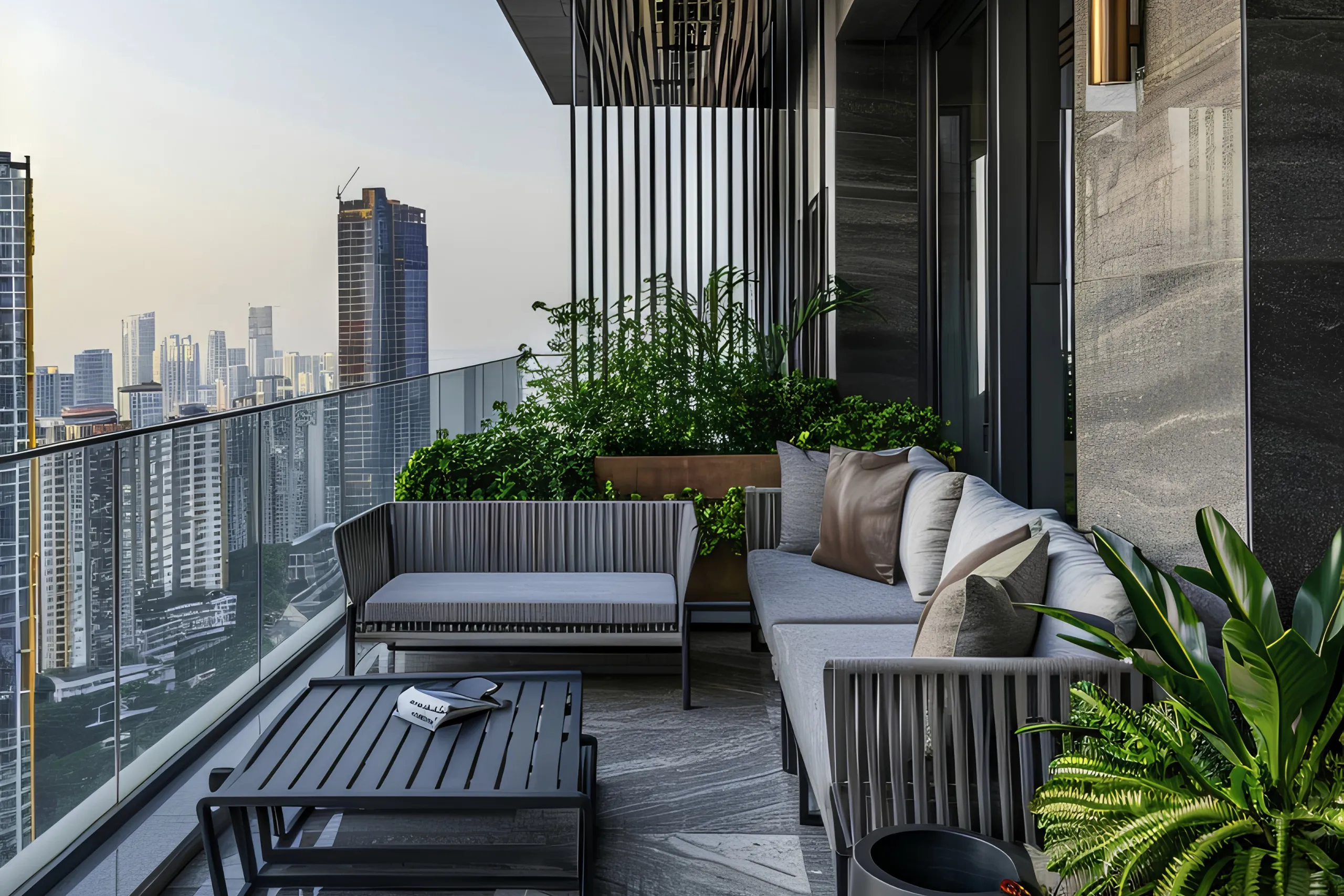
For smaller apartments, terrace flat interior design should prioritize compact furniture, clear walking paths, and vertical space. Folding chairs, narrow dining tables, built-in benches, and wall-mounted planters can provide useful features without making the terrace feel crowded. Light colors and uncluttered layouts also help maintain an open appearance.
A practical room design for terrace areas begins by assigning each corner a purpose. Place the primary seating where it receives the most useful shade, position plants along the edges, and keep the entrance clear. This approach creates a more organized setting without requiring extensive renovation.
Extend the Interior Into a Covered Terrace
Indoor terrace design works well when a covered or enclosed area needs to feel connected to the main living space. Use complementary flooring, comfortable seating, layered lighting, and coordinated decorative accessories to create a natural transition.
If the terrace is fully enclosed, consider ventilation, glazing, heat gain, and how much daylight enters the space.
With modern terrace house interior design, consistency matters more than matching every detail. Repeating two or three colors from the interior can create a unified appearance while outdoor textures add their own character.
When comparing ideas for the best interior design for terrace house layouts, focus on proportion, circulation, and the way the family will use the space. Oversized sofas or large dining sets can reduce comfort if they leave insufficient room to move between doors, seating, and planters.
How to Plan a Functional Terrace Design in Dubai
A successful project begins with a clear plan rather than buying furniture and decorative accessories at random.
- Measure the Space: Record the terrace dimensions, door positions, existing seating, drainage points, and any structural obstacles. Note which parts receive direct sunlight and where natural shade is available.
- Define Its Main Purpose: Decide whether the priority is outdoor dining, family relaxation, gardening, entertaining, or a combination of uses. This decision determines the layout and the amount of furniture required.
- Select the Design Style: Choose a contemporary, minimalist, natural, or luxury-inspired look that complements the property. Establish a simple color palette before selecting finishes and accessories.
- Plan Shade and Lighting: Consider pergolas, retractable awnings, outdoor blinds, or suitable umbrellas. Position lighting around seating, pathways, and dining areas, and plan the required wiring before installing new flooring.
- Choose Furniture and Greenery: Select appropriately sized, weather-resistant furniture and plants suited to the available sunlight, wind exposure, and maintenance routine.
- Review Technical Requirements: Before adding heavy planters, raised floors, water features, or permanent structures, check the terrace’s load capacity, waterproofing, drainage, and applicable approval requirements.
This sequence helps avoid expensive changes after installation and keeps the final design aligned with the available space and budget.
Choosing Flooring, Furniture, and Weather-Resistant Materials
Durable terrace interior design depends on choosing finishes that can handle outdoor exposure without demanding excessive maintenance. Porcelain paving, suitable natural stone, and exterior-rated decking are common options, but each has different installation and care requirements.
Light-colored porcelain or stone can be a practical choice for sun-exposed areas because it generally stays cooler underfoot than darker finishes in direct sunlight. Select products rated for outdoor use, and check their slip resistance, especially around pools or areas likely to become wet.
Composite decking offers a wood-like appearance with different maintenance requirements from natural timber, although its surface can still become hot in direct sun.
Furniture deserves the same attention as flooring. Powder-coated metal, suitable treated timber, and outdoor-rated synthetic materials can work well when their specifications match the exposure conditions.
Choose UV-resistant fabrics, washable cushion covers, and protective storage for soft furnishings. Materials should be selected for their actual performance, not just their appearance in a showroom.
Adding Greenery, Lighting, Shade, and Privacy
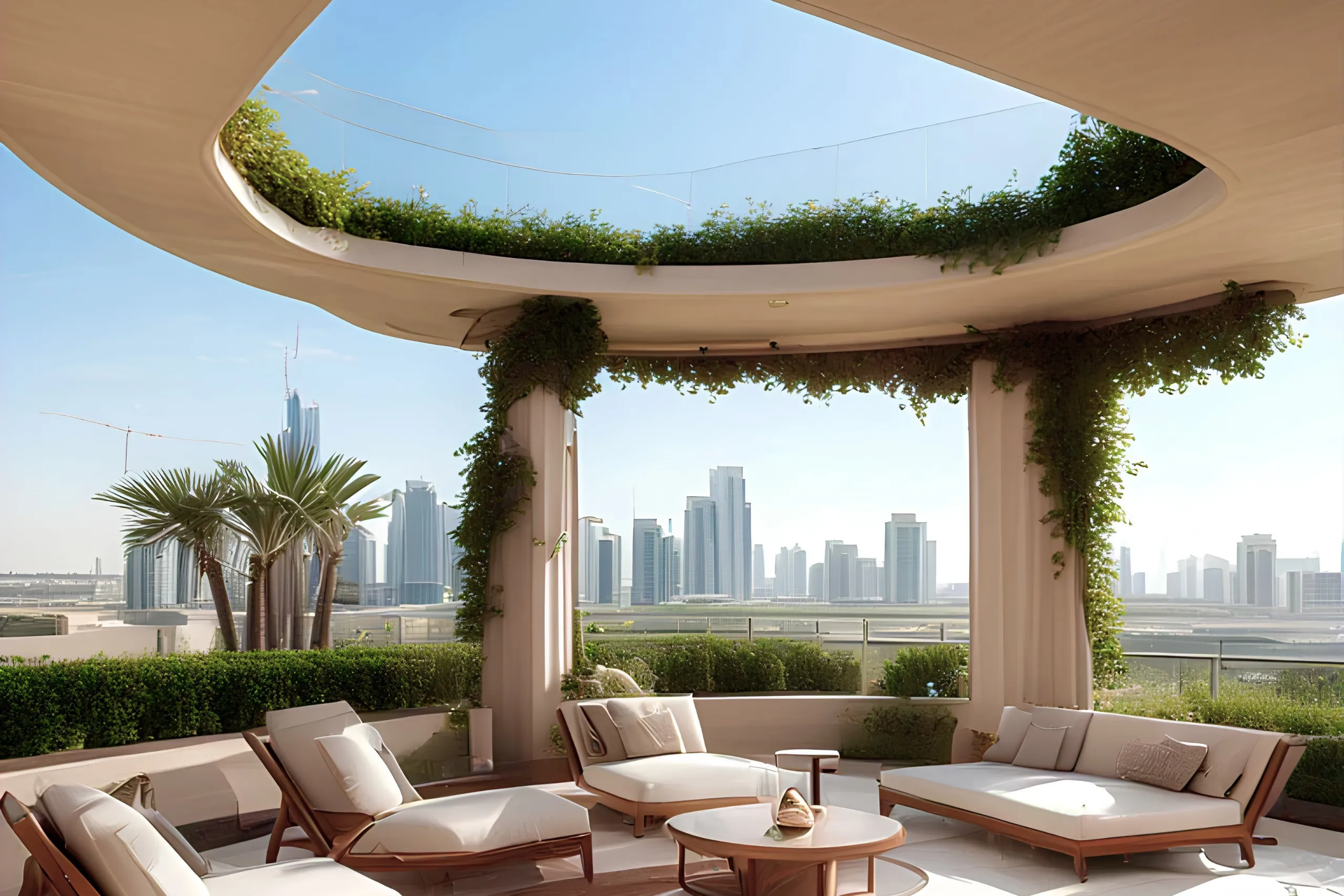
Greenery adds texture, color, and a natural character to a terrace. A combination of large planters, smaller pots, and vertical planting can soften hard surfaces and create visual separation between different activity areas.
Choose plants suited to Dubai’s climate and the terrace’s actual sun exposure, and consider automated irrigation where it makes watering easier.
For rooftop gardens, planting weight and water management require particular care. Soil, planters, and water features add loads, so their placement should be checked before installation. Use suitable drainage and irrigation systems to avoid persistent moisture around the building.
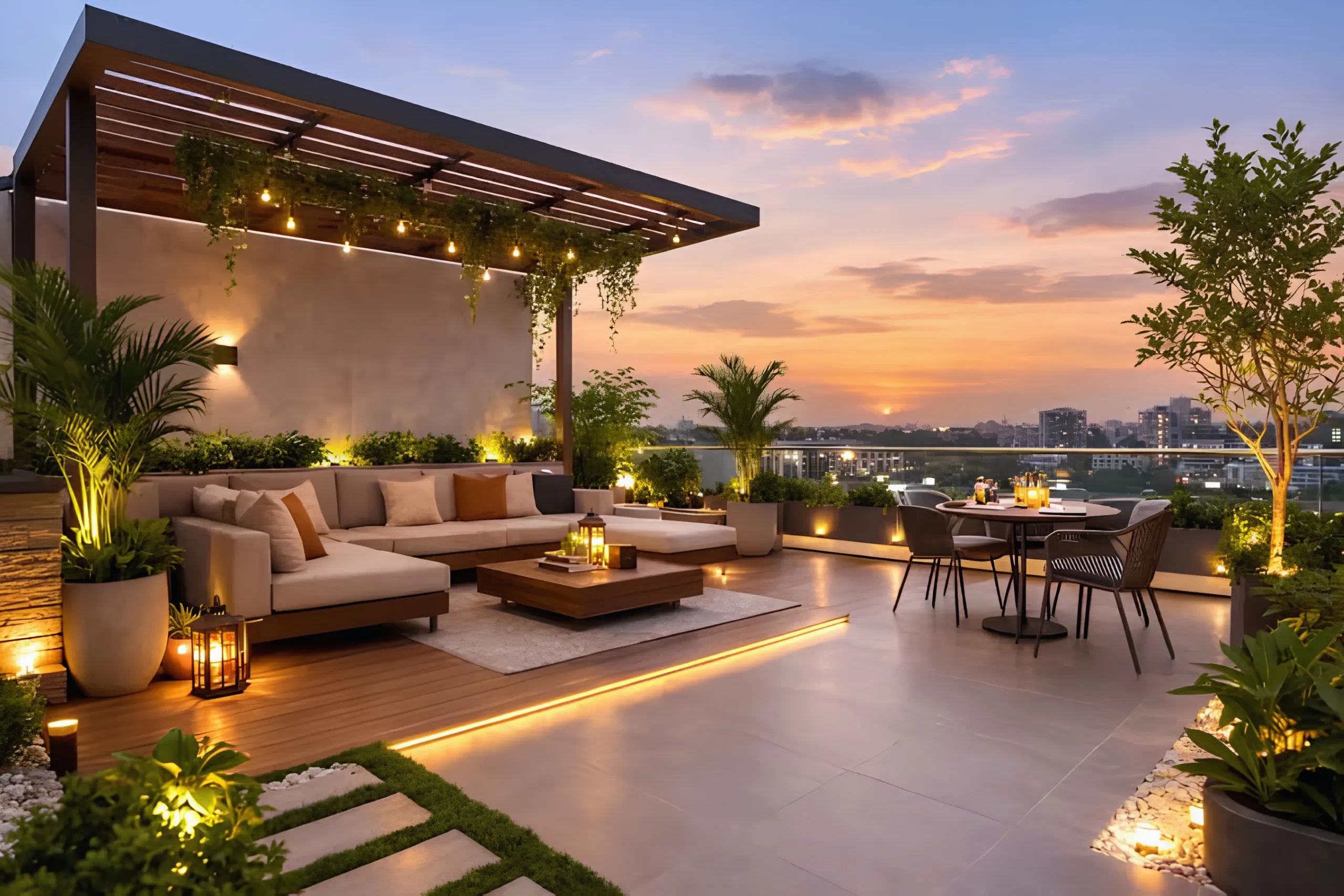
Lighting helps a terrace remain useful after sunset. Warm wall lights, recessed step lighting, and subtle illumination around plants can make the setting feel inviting without overwhelming it. Select fixtures designed for outdoor conditions and provide sufficient light along routes where people walk.
Privacy is equally important, particularly where neighboring buildings overlook the terrace. Slatted screens, appropriately sized planters, outdoor blinds, and approved decorative dividers can create separation while maintaining airflow.
Shade and privacy should be planned together so that a screen blocks unwanted views without unnecessarily closing off the space.
Budget, Safety, and Approval Considerations
Terrace renovation costs in Dubai typically range from AED 3,000 to AED 90,000 or more, depending on the size of the terrace, materials, and scope of work. Reusing serviceable furniture and prioritizing the most useful improvements can help control spending.
It is generally sensible to resolve drainage, waterproofing, and structural questions before investing in decorative upgrades.
In Dubai, do not assume that every terrace alteration can proceed without permission. The Dubai Building Code sets minimum requirements relating to building safety and other design considerations.
For jointly owned properties, substantial changes to a unit’s structure or external appearance may require approval from the master developer, Dubai Land Department, Dubai Municipality, and relevant authority under the applicable law.
Requirements depend on the property, location, community, and proposed work. Check the applicable rules before installing a permanent pergola, changing an external feature, extending a terrace, or carrying out work that could affect waterproofing or structural safety.
How Atech Interiors LLC Can Help
Atech Interiors offers a thoughtful, design-focused approach to creating attractive and functional living spaces. For homeowners planning terrace interior design in Dubai, the goal is to develop a space that reflects their lifestyle while considering practical issues such as layout, material selection, lighting, and the connection between indoor and outdoor areas.
A well-considered design begins with understanding the property and the client’s requirements. Atech Interiors can help bring these elements together through coordinated planning, design development, and fit-out considerations, with applicable approvals assessed before work proceeds. The result should feel cohesive with the home’s architecture while remaining comfortable and practical for everyday use.
Whether you are improving a compact apartment terrace or planning a more elaborate villa entertainment area, professional guidance can help you make better decisions about proportions, finishes, and the order of work. Atech Interiors LLC is a strong option to consider when looking for a team that values both visual appeal and practical results.
Final Thoughts
Good terrace interior design combines thoughtful planning, durable materials, comfortable furniture, effective shade, and carefully placed greenery. In Dubai, addressing heat exposure, drainage, and maintenance from the beginning makes the space more practical over time. With a clear design plan and the right professional support, your terrace can become a natural extension of your home.
FAQs – Frequently Asked Questions
1. What Is the Best Flooring for a Terrace in Dubai?
Outdoor-rated porcelain tiles and suitable natural stone are popular choices because they can be durable and relatively easy to maintain. Compare heat retention, slip resistance, drainage, and installation requirements before choosing a finish.
2. How Can I Make a Small Terrace Look Bigger?
Use compact furniture, a limited color palette, vertical planters, and clear walking paths. Avoid overcrowding the space with decorative accessories or bulky seating.
3. How Much Does Terrace Interior Design Cost in Dubai?
The cost depends on the terrace size, existing condition, material quality, custom furniture, shade structures, lighting, landscaping, and installation work. A site assessment and detailed scope of work are the best starting points for obtaining a realistic quotation.
4. Do I Need Approval to Install a Pergola on My Terrace?
Approval requirements depend on the property type, community rules, and the proposed structure. Check with the relevant property management, master developer, and authorities before installation, especially if the work affects the building’s exterior or waterproofing.
5. How Can I Make My Terrace Comfortable During Hot Weather?
Prioritize effective shade, suitable light-colored flooring, outdoor-rated materials, and furniture fabrics designed for sun exposure. Fans beneath a suitable covered structure may also improve comfort, although they do not replace adequate shade.