
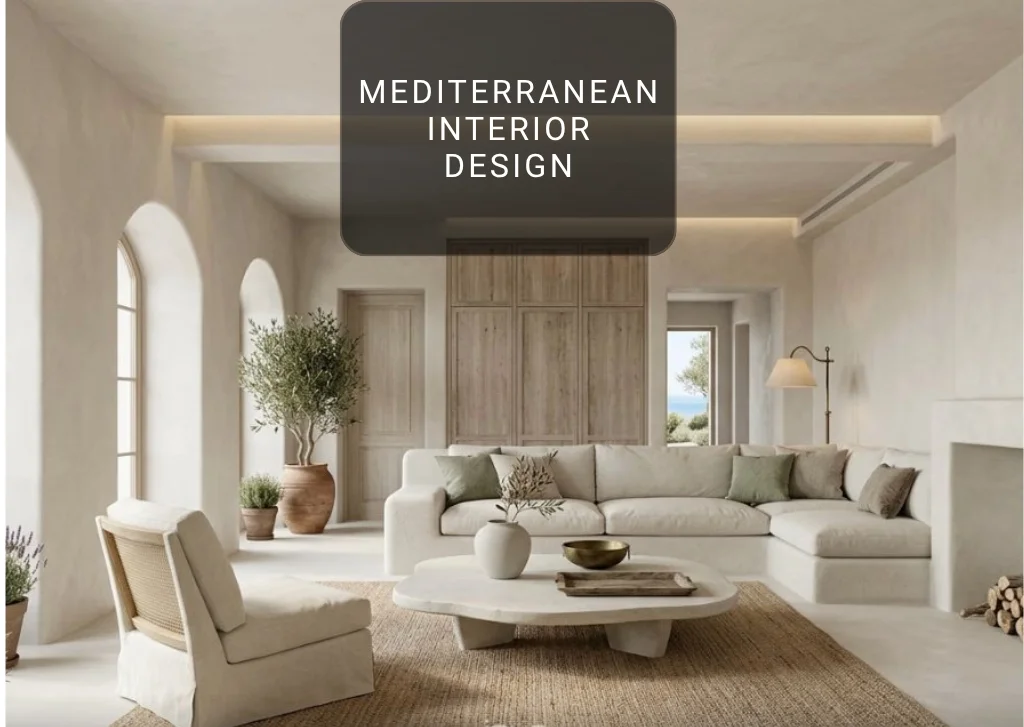
Mediterranean interior design works especially well in Dubai when its relaxed character is combined with practical climate planning. Instead of copying a European coastal villa, the better approach is to use natural materials, filtered daylight, comfortable layouts, and shaded outdoor areas in a way that suits local heat.
That is why the style can feel luxurious without relying on shiny finishes or excessive decoration. For homeowners, the real goal is a home that feels cool, calm, textured, and easy to live in.
What is Mediterranean Interior Design?
Mediterranean interior design is a style shaped by homes around the Mediterranean, especially Spain, Italy, and Greece, where architecture responds closely to sunlight, outdoor living, and local materials. Plaster walls, arches, stone, timber, terracotta, linen, and relaxed furniture create a warm setting that feels connected to nature.
It is also flexible: a Greek-inspired room can be bright and simple, while a Spanish-inspired space may feel more rustic and large. The key is not copying one country but creating a natural, welcoming home with regional character.
Key Characteristics of Mediterranean Interior Style
Arches, Curves, and Openings
Arches should be used as real architectural features rather than pasted-on decoration. A wide doorway can take a smooth curve, while smaller windows can use softer rounded forms that are repeated through furniture or cabinetry.
In a Dubai villa, an arched opening can also frame a garden, pool, or courtyard, making the outside part of the interior view. This gives the Mediterranean interior style a sense of continuity instead of filling the room with unrelated motifs.
Natural Light and Airy Layouts
The best Mediterranean rooms feel bright because daylight is controlled, not because every wall is replaced with glass. Large openings, pale surfaces, light curtains, and clear sightlines help create an airy interior, while overhangs, blinds, shutters, or pergolas manage Dubai’s glare and solar heat.
A room should ideally open toward a terrace, courtyard, or planted view where the architecture allows. This is also why modern Mediterranean home decor works better when the layout is considered before furniture and accessories.
Handcrafted, Imperfect Finishes
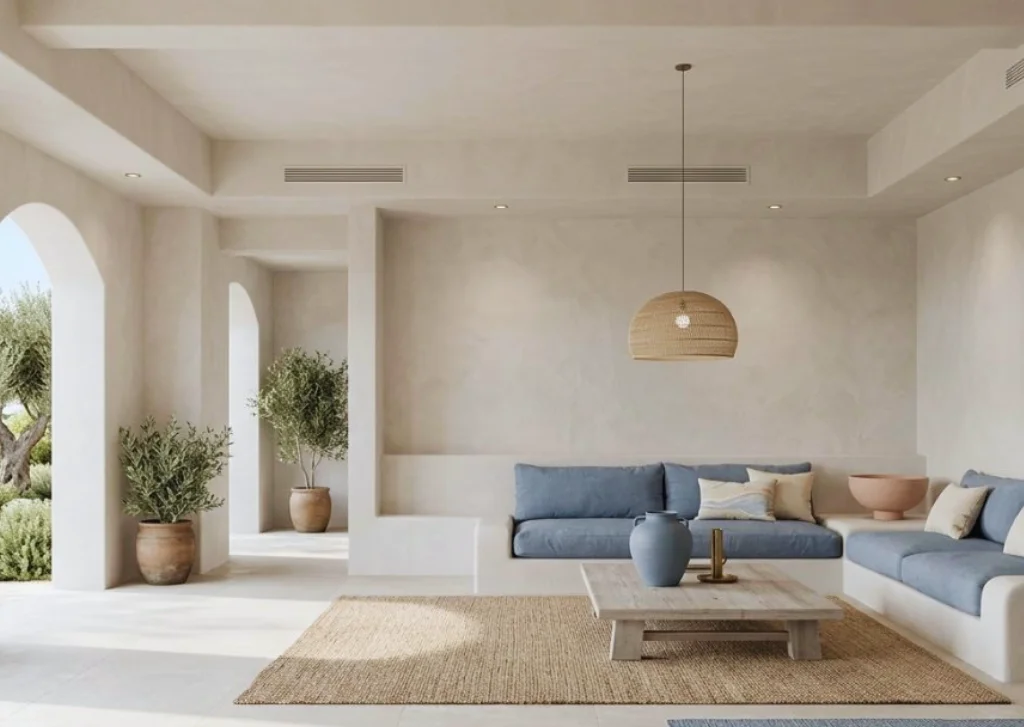
Natural variation is part of the charm: slight plaster movement, handmade tile variation, visible timber grain, aged brass, and stone with natural differences all add depth. This does not mean accepting careless workmanship; the installation still needs accurate preparation and clean detailing.
The objective is a space that feels crafted rather than factory-perfect. That distinction matters when designing modern Mediterranean-style home interiors because too much visual perfection can remove the warmth that makes the style attractive.
The Mediterranean Color Palette: Earthy Tones and Sea-Inspired Hues
- Terracotta, Ochre, and Sand: Build the room around sand, cream, beige, and warm ochre, then bring terracotta into tiles, pottery, textiles, or small features for controlled warmth.
- Olive Green and Sea Blue Accents: Olive, sage, and muted blue can add depth without making the room beach-like; use them selectively in artwork, tile, or accessories.
- Whitewashed and Lime-Plastered Walls: Pale walls keep rooms bright, while lime-based finishes provide gentle movement and texture as daylight changes across the surface.
Materials and Textures That Define the Mediterranean Look
- Lime and Venetian Plaster: Lime plaster gives a mineral, textured surface, while Venetian plaster creates a smoother decorative effect; they should not be treated as identical finishes, and specialist application matters.
- Terracotta and Natural Stone Flooring: Terracotta, limestone, and travertine provide the earthy, durable foundation associated with the style; matte or naturally varied surfaces usually look more authentic than high gloss.
- Timber Shutters, Rattan, and Wrought Iron: Timber shutters can control glare, rattan adds woven softness, and wrought iron provides crafted detail, while exterior metal near the coast needs suitable corrosion protection.
- Linen and Heavy Cotton Textiles: Linen and cotton work for curtains, bedding, cushions, and fabric covering, adding softness while helping filter the strong daylight common in Dubai.
Does Mediterranean Design Suit Dubai’s Climate?
Yes, Mediterranean design can suit Dubai’s climate, but only when traditional ideas are adapted to Dubai’s stronger heat and sun. Pale surfaces, protected openings, courtyards, filtered daylight, and shaded outdoor areas are useful responses, while large glazed areas need proper solar control.
For villas, shade should be planned before the terrace furniture because an attractive outdoor area can become unusable during the hottest months without it. This climate-aware approach makes the style more practical than simply recreating a European coastal look.
Mediterranean Interior Design Ideas for Every Room
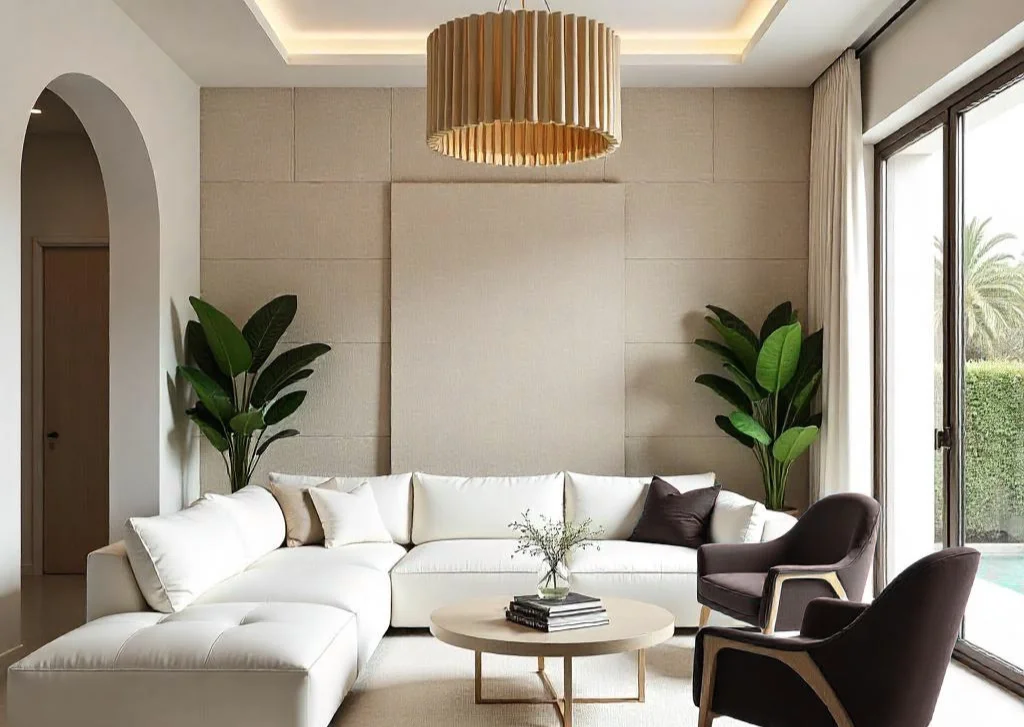
Mediterranean Living Room Design Ideas
A good living room should feel relaxed rather than formal, using a comfortable sofa, timber, stone, linen curtains, textured walls, and one or two strong craft pieces. Mediterranean decorating ideas for living room schemes become more useful when the furniture faces a garden, courtyard, or conversation area rather than automatically facing the television.
A vintage rug, curved chair, woven lamp, or aged-metal detail can add history without clutter. For a balanced Mediterranean decor living room, keep the architectural background quiet and let texture provide most of the interest.
Mediterranean Kitchen Design for Dubai Homes
A practical kitchen can combine timber cabinets, limestone or other natural stone, a handmade-looking wall tile, and simple aged-metal hardware with modern appliances and storage.
The strongest Mediterranean decor kitchen schemes use one main feature, such as patterned tile or an arched built-in shelf, rather than decorating every surface.
Choose materials that can handle daily cooking, cleaning, and heat, and make ventilation a priority. This approach keeps Mediterranean modern decor attractive while still meeting the demands of a working Dubai kitchen.
Mediterranean Bedroom Design Ideas
Use warm white, sand, cream, muted blue, or olive with linen bedding, timber furniture, soft lighting, and simple patterns. Mediterranean bedroom decorating works particularly well when the room feels tactile but not busy, using one curved feature such as a headboard or built-in shelf rather than several competing shapes.
Layering a rug, natural wood, and soft curtains can make the room feel warmer without making it dark. The result is calm, comfortable, and suited to everyday rest.
Mediterranean Bathroom Design
A bathroom can create the look through stone, marble, warm metal, simple handmade-style tiles, and a restrained neutral palette rather than heavy decoration. An arched built-in shelf or rounded cabinet can provide character, while good ventilation, slip resistance, moisture resistance, and easy maintenance remain essential.
This is where Mediterranean interior decor should feel refined rather than themed. A few excellent materials will usually create more impact than many decorative accessories.
Mediterranean vs Modern and Boho-Chic Interior Design
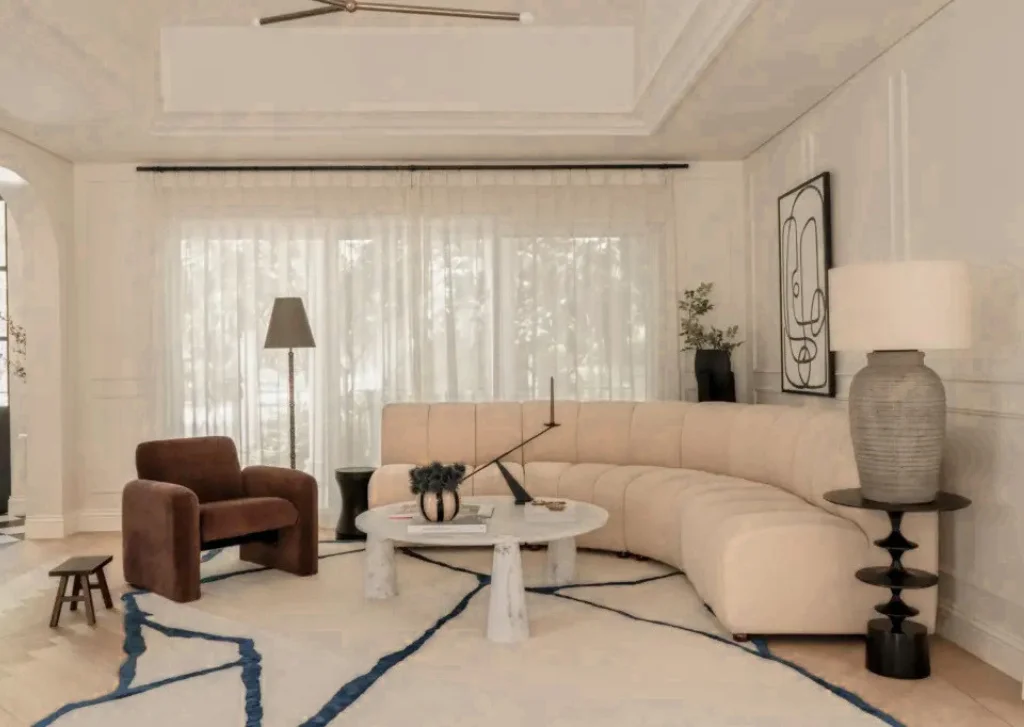
A complete Mediterranean vs Modern and Boho interior design comparison table is as follows:
How Much Does Mediterranean Interior Design Cost in Dubai?
A Mediterranean interior design project in Dubai can typically cost around AED 400–650 per sq. ft. for a mid-range villa fit-out and AED 650–1,200+ per sq. ft. for a luxury finish, while design fees may add around 10 – 20% of the project budget.
The final price depends on the size of the property, natural stone, plaster, custom joinery, furniture, MEP work, and outdoor areas such as pergolas and landscaping.
Common Mistakes to Avoid
- Skipping Shade in Outdoor Planning: Design pergolas, planting, and other shade measures before buying outdoor furniture; in Dubai, comfort depends on solar protection as much as appearance.
- Using the Wrong Plaster Applicator: Lime finishes need proper preparation and experienced application, so approve a sample on the actual wall before committing to the full project rather than relying on showroom samples.
- Overdoing Color Instead of Texture: Too much blue, yellow, or terracotta can make a home look themed; use a quiet base and let plaster, stone, timber, linen, and handmade details create the character.
Conclusion
A successful Mediterranean home is built around a clear relationship between material, light, space, and climate. The strongest projects do not simply add arches and blue tiles; they use texture, proportion, shade, natural surfaces, and indoor-outdoor planning to create a well-matched experience.
That is what separates a durable design from a short-lived trend, especially in Dubai where climate and construction choices directly affect comfort. Whether you prefer French Mediterranean interior design, Greek Mediterranean interior design, or a more contemporary interior design, the same principle applies: keep the palette controlled and let the architecture and materials do the work.
Atech Interiors LLC provides Mediterranean interior design services in Dubai, creating warm, elegant spaces with natural materials, soft colors, and thoughtful architectural details. From initial design to fit-out, our team helps bring a practical and well-executed Mediterranean look to your property, so contact us now!
FAQs – Frequently Asked Questions
1. What makes a home look Mediterranean?
A home looks Mediterranean when arches, plaster, stone or terracotta, natural timber, linen, earthy colors, and indoor-outdoor connections work together instead of relying on decorative blue-and-white accessories alone.
2. Is Mediterranean interior design trending in Dubai right now?
Yes. Mediterranean interior design remains highly relevant for Dubai homes because its natural materials, relaxed luxury, and indoor-outdoor planning suit current villa preferences when adapted to local heat and shading needs.
3. What’s the best flooring for Mediterranean-style homes in hot climates?
Terracotta, limestone, travertine, and other suitable natural stones are strong choices because they provide Mediterranean character, durability, and a naturally grounded feel.
4. Can Mediterranean style be combined with Arabic design elements?
Yes, arches, screens, geometric tile, carved details, plaster, stone, and handcrafted metal can blend naturally when the regional elements are kept selective, and the overall palette remains unified.
5. Can Mediterranean design work in Dubai apartments, not just villas?
Yes, Mediterranean interior design can work in apartments by focusing on plaster-like walls, a simple palette, curved furniture, natural textures, and lighting rather than depending on large terraces or structural changes.