

Quick answer: In a Dubai commercial lease, the landlord usually hands over the base building, as shell and core or Category A, and the tenant pays for the fit-out that makes the space work for their business. Who pays for what, the length of the fit-out period and what must be restored when the lease ends are set in the lease, so agree them before signing.
When leasing a commercial space in Dubai, the rent is only one part of the financial commitment. Before a business can open its office, retail store, restaurant or clinic, the space may need considerable work. Some properties are handed over as shell and core, others have basic finishes and services in place, while a few are offered with an existing fit-out.
If you are comparing units, our guide to shell and core vs Category A vs Category B explains each handover condition, and Atech’s fit-out team can review a unit before you sign.
One of the first questions that comes up during leasing is who is expected to pay for that work. Does the landlord provide the flooring, ceiling, air conditioning and electrical infrastructure? Does the tenant pay for everything beyond the bare shell? Is the fit-out period free of rent, and what happens to the improvements when the lease ends?
These arrangements are not uniform across Dubai. They depend on the property, the lease agreement, the landlord’s offering, the building requirements and the negotiated terms.
Understanding the division of responsibilities before signing a lease can help businesses avoid unexpected expenses, delays and disagreements during construction or handover.
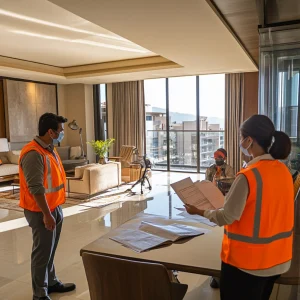
1. What Is a Landlord Fit-Out and What Is a Tenant Fit-Out?
The terms landlord fit-out and tenant fit-out refer to two different parts of preparing a commercial property for occupation. The distinction is useful during lease negotiations because it determines what the landlord provides before possession and what the tenant needs to arrange before opening.
Landlord Fit-Out
A landlord fit-out generally refers to the building infrastructure, base-build provisions or improvements provided by the property owner before the tenant takes possession. The extent of this work varies significantly between properties.
Depending on the property and lease agreement, the landlord may provide:
- Base building structure and shell.
- Basic electrical and utility connections.
- Central air-conditioning infrastructure or designated HVAC connections.
- Base building fire and life safety systems.
- Common areas, lifts, corridors and building services.
- Existing flooring, ceiling or basic finishes, where agreed.
- Certain fixtures, fittings or improvements negotiated as part of the lease.
Not every landlord provides a fully fitted or ready-to-occupy unit. In many commercial buildings, the space is handed over as shell and core, which means the tenant needs to undertake most of the interior construction.
Tenant Fit-Out
A tenant fit-out refers to the interior works undertaken to prepare the leased premises for the tenant’s specific business, operational requirements and brand identity.
Typical tenant fit-out work may include:
- Internal partitions and room layout.
- Flooring, ceiling and wall finishes.
- Lighting and electrical distribution.
- HVAC modifications and additional cooling.
- Pantry and internal plumbing.
- Meeting rooms, reception and workstations.
- Joinery, storage and furniture.
- IT, data and access control systems.
- Signage and branding.
- Additional fire and life safety work required for the proposed layout.
The tenant typically coordinates these works with the landlord or building management and the relevant authorities. The lease agreement, however, may assign some of these responsibilities differently.
2. Landlord vs Tenant: Who Pays for What?
The responsibility for fit-out costs is one of the most important commercial terms to establish before signing a lease. While certain responsibilities are common across commercial leasing arrangements, there is no single fit-out cost allocation that applies to every commercial property in Dubai.
What the Landlord Is Generally Expected to Provide
Dubai’s tenancy legislation sets out certain landlord obligations. Article 15 of Law No. 26 of 2007 states that the landlord must hand over the property in good condition, allowing the tenant to use it for the purpose specified in the lease. Article 16 addresses maintenance and repairs unless otherwise agreed. Article 18 also addresses the landlord’s obligation to provide approvals required for certain non-structural tenant works, subject to the stated conditions.
These provisions do not automatically mean that the landlord must fund every interior fit-out or upgrade. Commercial lease terms can allocate many fit-out and maintenance responsibilities differently, and the tenant’s intended use and agreed handover condition matter.
What the Tenant Is Generally Expected to Pay For
In many commercial leases, the tenant is responsible for preparing the premises for the business’s specific requirements. This may include architectural design, fit-out construction, internal services, furniture, branding and the cost of obtaining relevant approvals.
For example, a tenant leasing an office in shell-and-core condition may need to fund the complete interior fit-out. A tenant taking over a previously fitted office may only need modifications, repairs, furniture or additional services.
The cost difference between these two situations can be substantial.
3. Shell and Core, Fitted and Part-Fitted Spaces: What Is Being Handed Over?
The condition in which the property is handed over is often more important than the quoted rent when estimating the total cost of occupation.
Shell and Core
Shell-and-core spaces typically provide the building shell and structural elements with limited internal finishes. The scope of available infrastructure and utility connections can vary.
The tenant may need to arrange:
- Internal walls and partitions.
- Ceiling and flooring.
- Lighting and electrical distribution.
- HVAC distribution and additional cooling.
- Pantry, plumbing and internal facilities.
- Furniture, meeting rooms and storage.
- Fire and life safety modifications required by the proposed design.
Shell-and-core premises can provide greater freedom to design the space around the business, but they also require more planning, construction and investment before occupation.
Part-Fitted Spaces
A part-fitted property may already have flooring, ceiling, lighting, HVAC, partitions or basic infrastructure. However, the existing layout may not suit the tenant’s requirements.
Before accepting a part-fitted property, inspect the existing infrastructure and establish:
- Whether the HVAC system is adequate for the proposed occupancy.
- Whether the existing electrical capacity is sufficient.
- Whether partitions need to be removed or relocated.
- Whether the existing ceiling and flooring can be retained.
- Whether the fire protection system needs modifications.
- Whether the existing fit-out has approvals and completion documentation.
Retaining parts of an existing fit-out can reduce the construction scope, but only if the components are suitable, compliant and in usable condition.
Fully Fitted Spaces
A fully fitted commercial property may already have a complete office, retail or other commercial interior. It can reduce the time required before occupation, particularly where the existing layout suits the business.
A fully fitted space should not automatically be assumed to be ready for occupation. The tenant should confirm the condition of the systems, approved plans, permitted use, maintenance history and any modifications required before accepting the premises.
For businesses considering a complete interior transformation, Atech’s interior fit-out services provide a reference point for the scope of commercial interior work that may be involved.

4. What Is a Fit-Out Period in Dubai?
A fit-out period is the time allocated to a tenant to prepare the leased premises before commencing normal business operations. In commercial leasing, this period is often negotiated as part of the lease agreement, particularly when the property requires substantial interior construction.
The fit-out period may be offered as a rent-free concession, but the two terms should not be assumed to mean the same thing unless the lease clearly states it.
These are indicative planning allowances for fit-out activities, not standard landlord concessions or guaranteed durations. Authority approvals, procurement, inspections and specialist works may extend the overall period.
A landlord may offer a fixed fit-out period regardless of the construction schedule. If the tenant’s work takes longer than the agreed period, the rent commencement date may still apply unless the lease provides otherwise.
Is the Fit-Out Period Rent-Free?
A rent-free fit-out period is negotiated, not automatically granted.
Some landlords offer a rent-free period to attract tenants, particularly where the premises require substantial construction. Others may provide a shorter concession or no concession at all.
The agreement should specify:
- The exact start and end dates of the fit-out period.
- Whether the period starts from lease signing, possession or another defined date.
- Whether base rent is waived.
- Whether service charges remain payable.
- Whether utilities, cooling and access charges remain payable.
- Whether the fit-out period can be extended.
- Whether the fit-out period is conditional on the tenant completing specified works.
A rent-free period may reduce the tenant’s initial rental burden, but it does not necessarily eliminate all costs during construction.
5. Fit-Out Period vs Rent Commencement Date
The fit-out period and the rent commencement date should be clearly distinguished in the lease. They are related, but they do not necessarily begin or end on the same date.
These dates can differ. A tenant may receive keys and access to the premises before rent commences, or the rent commencement date may be fixed regardless of whether construction has been completed.
Example of a Fit-Out Period Arrangement
Consider a business leasing a 2,500 sq. ft. office in Dubai.
- Lease signed: 1 January
- Possession: 15 January
- Fit-out access: 15 January
- Agreed fit-out period: 60 days
- Rent commencement: 16 March
- Target opening: 1 April
The tenant may have a rent-free fit-out period until 15 March, depending on the agreement. However, the tenant could still be paying utilities, service charges, contractor costs, insurance, fit-out deposits or other expenses during the period.
If the contractor takes longer than expected and the business opens in April, the rent may still be payable from 16 March if the lease does not provide for an extension.
This is why the rent commencement date should be negotiated alongside the fit-out schedule, not after the lease has been signed.
6. What Happens During the Fit-Out Period?
The fit-out period is not simply time for construction. It involves a sequence of activities that must be coordinated between the tenant, landlord, building management, consultant, contractor and relevant authorities.
Typical Fit-Out Stages
Stage 1: Site handover and inspection
The tenant receives the premises and inspects the existing condition, services, infrastructure, access and any landlord-provided fixtures or fittings.
Stage 2: Design and space planning
The interior layout is developed around the business’s requirements. This includes partitions, workstations, meeting rooms, lighting, HVAC, electrical, furniture and other services.
Stage 3: Landlord or building management approval
The fit-out drawings and contractor details are submitted for review, as required by the building or landlord. NOCs and technical approvals may be required before construction.
Stage 4: Authority approvals
Depending on the location and scope, approvals may be required from Dubai Municipality, DCD, DDA, Trakhees or other relevant authorities. The specific route should be confirmed before work begins.
Stage 5: Construction
The approved works are carried out, including partitions, ceilings, flooring, electrical, HVAC, plumbing, joinery, furniture and other agreed work.
Stage 6: Testing, inspection and completion
The completed work is inspected, systems are tested, snagging is carried out and completion documentation is obtained where applicable.
Stage 7: Occupation and opening
Once the applicable completion approvals and operational requirements are met, the tenant can proceed with occupation and business operations.
Can the Fit-Out Period Be Extended?
An extension may be possible if the landlord agrees, but it should not be assumed.
The lease should address what happens if the fit-out is delayed because of:
- Late possession or incomplete landlord works.
- Delays in landlord or building management approvals.
- Authority approval delays.
- Changes requested by the tenant.
- Contractor delays.
- Material or equipment procurement issues.
- Additional work arising from existing site conditions.
Where the tenant is dependent on the landlord to provide drawings, approvals, services or access, the agreement should establish how delays affect the fit-out schedule and rent commencement.

7. Handover Before the Fit-Out: What Should the Tenant Check?
Taking possession of a commercial property without documenting its condition can create disputes later. The handover process should establish what the tenant has received, what remains incomplete and which party is responsible for outstanding items.
Pre-Fit-Out Handover Checklist
Before the contractor begins work, the tenant should review the following:
- Existing condition: Walls, floors, ceilings, doors, windows and visible defects.
- Electrical: Available power, distribution boards, capacity and existing connections.
- HVAC: Cooling provisions, equipment condition, air distribution and access to maintenance.
- Plumbing: Water supply, drainage, existing washrooms and pantry connections, where applicable.
- Fire safety: Existing fire alarm, sprinkler, emergency lighting and other relevant provisions.
- Access: Contractor access, loading, lifts, working hours and site restrictions.
- Documentation: Existing drawings, approvals, manuals and equipment information.
- Fixtures and fittings: Inventory of landlord-provided items.
- Outstanding works: Written record of items that the landlord still needs to complete.
Photographs and a signed handover report can provide a useful record of the condition of the property before tenant construction begins.
Why the Handover Condition Matters
If the tenant accepts a property without documenting defects or incomplete work, it can become difficult to establish whether an issue existed before the fit-out or arose during construction.
This is particularly relevant to flooring damage, HVAC problems, water leaks, electrical issues and existing fire safety systems.
The lease and handover documentation should clearly identify the condition of the premises and any outstanding landlord responsibilities.
8. Handover After Fit-Out: What Needs to Be Completed?
Fit-out handover is the point at which the completed interior works are reviewed, tested and documented before the space is occupied or formally handed over for use.
The process can involve the tenant, contractor, consultant, landlord, building management and authorities, depending on the scope of the project.
Fit-Out Completion Certificates and Approvals
The required completion documents vary depending on the property, authority and scope of work. Certain projects may require inspection and completion certification before the premises can be occupied or the business can begin operating.
For example, projects involving fire safety modifications may require the relevant fire and life safety inspection and documentation. Projects governed by specific free zones or master developers may also have their own completion procedures.
The tenant should confirm these requirements at the beginning of the project rather than waiting until construction is complete.
9. What Happens to the Fit-Out When the Lease Ends?
The end-of-lease handover is just as important as the initial fit-out. A tenant may have invested significantly in the interior, but that does not automatically mean the tenant can remove everything when vacating the premises.
The lease should specify whether the tenant is expected to retain the fit-out, remove certain installations or reinstate the property to its original condition.
Reinstatement Requirements
Reinstatement refers to the work required to return the premises to a specified condition when the tenant vacates.
Depending on the lease, this could involve:
- Removing partitions and tenant-installed walls.
- Removing signage and branding.
- Removing furniture and equipment.
- Restoring flooring or ceilings.
- Removing additional electrical or mechanical installations.
- Repairing damage caused by the fit-out.
- Returning the property to shell and core.
- Leaving approved improvements in place.
Article 21 of Dubai Law No. 26 of 2007 addresses surrendering the property in the condition in which it was received, subject to ordinary wear and tear and the stated exceptions. Article 23 also addresses leasehold improvements and their removal, subject to the agreement between the parties.
The actual reinstatement obligation should be established in the lease rather than assumed.
Should the Tenant Remove the Fit-Out?
Not necessarily. Some landlords may prefer to retain a suitable fit-out, particularly if it improves the property’s appeal to future tenants. Others may require reinstatement.
The tenant should clarify the following before investing in construction:
- Which improvements can remain?
- Which improvements must be removed?
- Who pays for reinstatement?
- Does the landlord have the right to request reinstatement?
- Can the tenant obtain written confirmation that certain items can remain?
- What condition must the property be returned in?
- Is reinstatement required at the end of the lease or earlier under specific circumstances?
Reinstatement can become a significant expense, particularly where a tenant has constructed meeting rooms, custom joinery, partitions, raised flooring or additional services. Planning for these costs at the beginning of the lease can prevent unpleasant surprises at the end.
10. Negotiating the Fit-Out Terms Before Signing the Lease
Fit-out responsibilities, rent-free periods and handover conditions should be discussed before the lease is finalised. Once the lease is signed and construction begins, changing these terms can be more difficult.
Key Fit-Out Terms to Negotiate
- Handover condition
Specify whether the property is shell and core, part-fitted or fully fitted. Include the agreed condition, landlord-provided fixtures and any outstanding works.
- Fit-out period
Agree on the duration, start date and conditions of the fit-out period.
- Rent commencement
Specify when rent becomes payable and whether the date is linked to possession, completion of landlord works or another contractual milestone.
- Rent-free period
Clarify whether base rent is waived, and whether service charges, utilities, cooling, deposits or other costs remain payable.
- Fit-out approvals
Establish who is responsible for landlord NOCs, authority submissions, consultant fees, contractor registration and approval coordination.
- Landlord contributions
If the landlord provides a fit-out allowance or financial contribution, document the amount, payment conditions, timing and any applicable restrictions.
- Maintenance
Clarify the responsibilities for base building systems, internal equipment, tenant-installed services, HVAC, electrical and plumbing.
- Reinstatement
Agree on whether the fit-out needs to be removed at the end of the lease, which items can remain and the expected condition of the premises upon return.
- Delays
Establish how delays caused by landlord works, access restrictions or approvals affect the fit-out period and rent commencement.
- Handover documentation
Identify the documents required at initial possession, during construction and at final handover.
A well-defined lease can reduce misunderstandings between the landlord and tenant and make it easier to plan the fit-out, budget and occupation timeline.
Conclusion
The division between landlord and tenant fit-out responsibilities in Dubai is not always straightforward. A landlord may provide the building infrastructure and agreed base-build provisions, while the tenant undertakes the interior works required for the business. However, the actual scope, costs, approval responsibilities and handover conditions depend on the lease agreement and the property.
The fit-out period should be treated as part of the commercial negotiation rather than an informal arrangement. Possession, contractor access, rent commencement, service charges, approvals and the eventual handover should all be clearly defined.
For businesses planning to lease commercial space in Dubai, understanding these terms before construction begins can help establish a realistic budget, prevent unnecessary delays and ensure the premises are prepared for the intended use.
Atech Interiors works on commercial interior fit-out projects involving design coordination, construction planning and execution. Where a leased space requires interior modifications, the scope and site conditions can be assessed before the fit-out process begins.
Discuss a commercial fit-out project with Atech Interiors.
Official sources: Dubai Land Department (RERA), Dubai Municipality.
Frequently Asked Questions
1. Who pays for the fit-out in a commercial property in Dubai?
In many commercial leases, the tenant pays for the interior fit-out required for the business, while the landlord provides the agreed base-build infrastructure and property condition. The exact responsibility depends on the lease and negotiated terms.
2. What is a landlord fit-out?
A landlord fit-out generally refers to the building infrastructure or improvements provided by the landlord before the tenant takes possession. This may include the building shell, base services, HVAC provisions and other agreed items.
3. What is a tenant fit-out?
A tenant fit-out refers to the interior works undertaken to prepare the leased space for the tenant’s business. It may include partitions, flooring, ceiling, lighting, electrical, HVAC modifications, furniture, joinery, branding and other interior requirements.
4. How long is a fit-out period in Dubai?
The fit-out period depends on the property, scope of work, approval requirements and lease terms. A small office fit-out may require a few weeks, while larger offices, restaurants or specialised facilities may require several months.
5. Is the fit-out period rent-free in Dubai?
Not automatically. A rent-free fit-out period is a commercial concession negotiated between the landlord and tenant. The lease should specify whether base rent is waived and whether utilities, service charges, cooling or other expenses remain payable.
6. When does rent start during a commercial fit-out?
The rent commencement date is determined by the lease agreement. It may begin after the agreed fit-out period, on a fixed date or based on another contractual milestone. It should not be assumed that rent starts only when the business opens.
7. Can the tenant make changes to a leased property in Dubai?
Tenants may undertake permitted alterations subject to the landlord’s consent, the applicable authority approvals and the terms of the lease. Structural modifications and other restricted works may require additional permissions.
8. What happens if the landlord delays handing over the property?
The consequences depend on the lease. The agreement should address delays in possession, incomplete landlord works, access and how these affect the fit-out schedule and rent commencement date.
9. Does the tenant have to remove the fit-out at the end of the lease?
Not necessarily. The reinstatement obligation depends on the lease and any written agreement between the parties. The tenant may be required to remove certain improvements or return the property to its original condition, while some approved installations may be permitted to remain.
10. What should be checked during commercial fit-out handover?
The handover should include a review of the completed construction, snagging, electrical and HVAC testing, plumbing, fire safety, relevant completion approvals, as-built drawings, warranties, manuals and any outstanding work.