
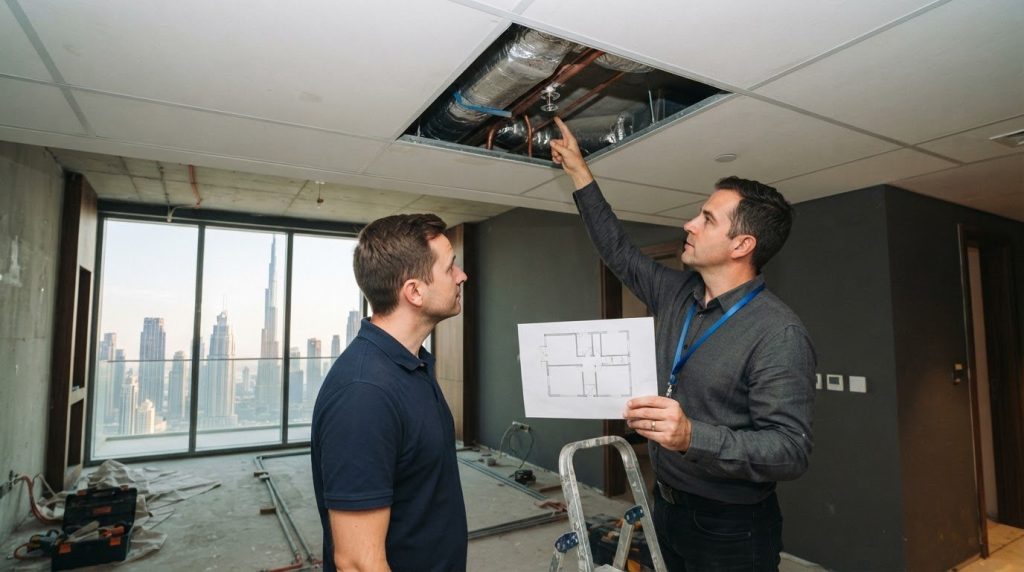
Starting renovation before approvals are clear can create a compliance problem, not just delay the project. A Dubai Municipality NOC for renovation is not a single permission covering every authority: major structural or MEP changes generally require both a developer or community NOC and a Dubai Municipality permit. Cosmetic work often does not need a Municipality permit, although building management may still require its own approval.
The approval route depends on the work and the rules for your building. This distinction matters: proceeding without a required permit can lead to a stop-work order, a fine, and an instruction to reinstate completed work at your cost.
This guide explains how to identify the approvals that apply, when a developer NOC is separate from authority approval, and the risks of starting too soon. It also outlines how renovation and approvals coordination can align the scope, drawings, submissions, and site work before construction begins.
Key Takeaways
- Identify the authority responsible for the property, since some Dubai districts follow Trakhees or Dubai Development Authority processes rather than the Dubai Municipality route.
- Keep the developer or community NOC distinct from an authority permit; major work may require both, with the NOC obtained before the authority submission.
- For structural changes or altered building services, plan for coordinated technical drawings and supporting engineering documents as part of the approval process.
- If you rent the property, obtain your landlord’s written approval before renovation work begins, alongside any building or authority permissions that apply.
Do I need an NOC from both the developer AND Dubai Municipality?
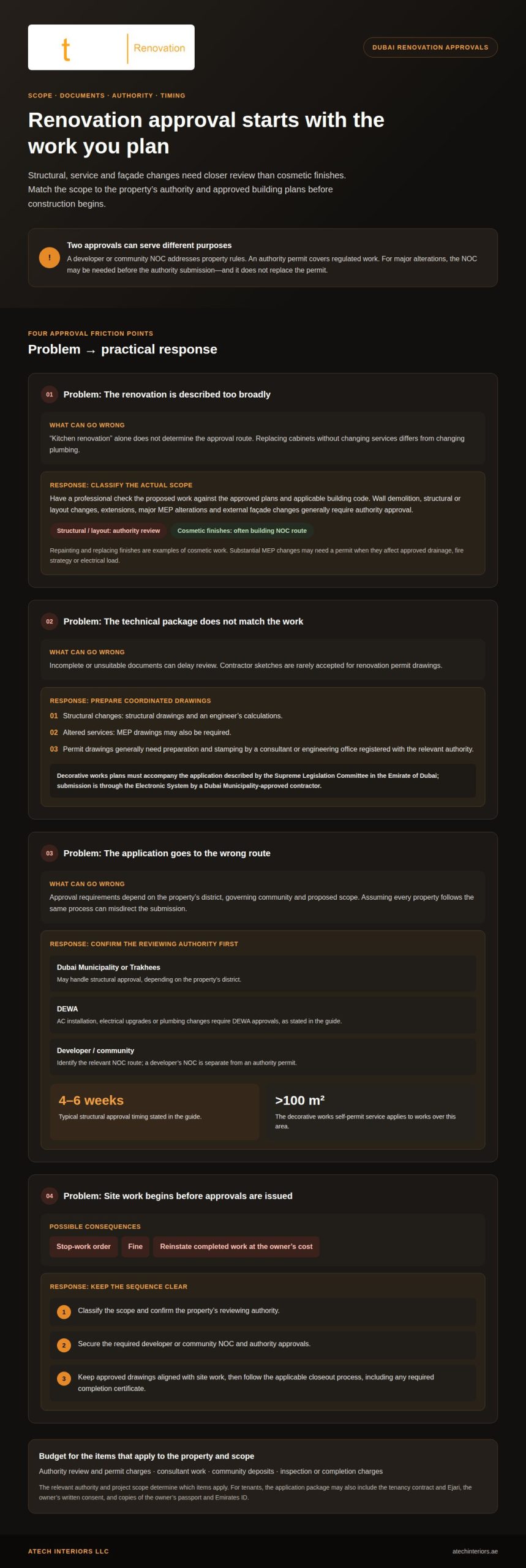
For major alterations, approvals may be separate: a developer or community NOC addresses property rules, while an authority permit covers regulated work. The correct route depends on the property’s location and the proposed scope.
-
Have a Professional Identify the Required Authority Permits
Identify the authority responsible for the property before submitting an application. Structural work in Dubai generally requires a developer or community no-objection certificate, followed by the relevant authority permit. Some areas use Trakhees, while districts under Dubai Development Authority follow its licensing system. A developer’s NOC does not replace a permit; each approval serves a different purpose.
-
Have a Professional Confirm When Renovation Work Needs a Permit
Have a professional classify the work before scheduling contractors. Wall demolition, structural changes, layout changes, major MEP alterations, and external facade changes generally require authority approval. Cosmetic examples such as repainting or replacing finishes often follow the building’s NOC route instead. Substantial MEP changes can require a permit when they affect approved drainage, fire strategy, or electrical load. The scope, not the room’s name, determines the route.
-
Have a Professional Submit the Municipality Permit Application
Have the professional prepare the application package and submit it through the applicable authority process. The Supreme Legislation Committee in the Emirate of Dubai states that decoration works plans must accompany the application, submitted by a Dubai Municipality-approved contractor through the Electronic System. Structural work may need stamped engineering drawings and calculations; altered services may need MEP drawings.
For tenants, the application package may include the tenancy contract and Ejari, the owner’s written consent, and copies of the owner’s passport and Emirates ID. Track the application through the relevant submission system. If it is rejected, address the stated reasons and follow the authority’s review process.
- Secure the required approvals before work begins. Starting without a required permit can lead to a stop-work order, a fine, and instructions to reinstate completed work at the owner’s cost. When planning the budget, account for authority review and permit charges, consultant work, community deposits, and inspection or completion charges where applicable. The property’s authority and project scope determine which items apply.
Renovation work requiring municipality approval
Approval depends on the work, the property’s authority, and the approved building plans. Structural, service, and façade alterations need closer review than cosmetic finishes.
-
Have a Professional Identify Renovation Work Requiring Approval
Have a professional classify the proposed work against the building’s approved plans and applicable building code. Structural changes, layout changes, extensions, and external façade alterations generally require authority approval. A decorative works self-permit service applies to works over 100 square metres. For properties associated with Meraas, DAMAC, or Dubai Properties, identify the relevant developer approval route rather than assuming one community’s process applies everywhere.
-
Have a Professional Prepare Drawings for Structural Changes
Prepare drawings that match the proposed scope before submitting the application. Structural applications should include structural drawings and an engineer’s calculations; altered services may also require MEP drawings. Renovation permit drawings generally need to be prepared and stamped by a consultant or engineering office registered with the relevant authority. Contractor sketches are rarely accepted, so incomplete technical documents can delay review.
-
Have a Professional Manage the Municipality or Trakhees Approval Process
Have the professional confirm the reviewing authority, then coordinate the required submissions and comments. Dubai Municipality or Trakhees may handle structural approval, depending on the property’s district. Structural approval typically takes 4 to 6 weeks. Work involving AC installation, electrical upgrades, or plumbing changes requires DEWA approvals. Keep approved drawings aligned with site work, then follow the applicable closeout process, including any required completion certificate.
-
Address Risks of Starting Before Approval
Keep contractors from starting regulated work before approvals are issued. Structural changes need authority review; plumbing or electrical alterations can require DEWA approval, while façade changes generally require authority approval. A kitchen renovation involving changed plumbing is different from replacing cabinets without service alterations. Unapproved work can trigger a stop-work order, a fine, and reinstatement at the owner’s cost. A professional can coordinate the renovation approval process before site work proceeds.
NOC for Villa Renovation in Dubai: Do You Need One?
Match the property type and renovation scope to the building-management and authority requirements. A villa in a master community may need a developer NOC before its authority application.
-
Have a Professional Check NOC Requirements for the Property Type
Identify the property’s governing developer, Owners Association, or master community. In apartments, cosmetic internal work commonly follows the building NOC route; significant technical changes may also need authority approval. Villa applications depend on the community and scope, while commercial spaces follow the applicable building-management and authority route. Do not assume the process for one property type applies to another.
-
Have a Professional Confirm Developer or Master-Community Requirements
Have a professional establish whether the villa or apartment needs a developer or community NOC before authority submission. Major work, including structural changes, generally requires this separate permission. For Nakheel villa renovations, the NOC letter is valid for 6 months, and its application may require a refundable security deposit of AED 5,000-20,000. On Palm Jumeirah, villa extensions or foundation work within 3 metres of a plot boundary require a geotechnical investigation report.
-
Meet Contractor and Consultant Requirements Through a Qualified Provider
Coordinate the application documents, drawings, and community requirements before scheduling work. Only Dubai Municipality-approved contractors can submit renovation permit applications. Applications require the contractor’s valid trade licence, third-party liability cover, and workmen’s compensation insurance. Permit drawings generally need to be prepared and stamped by a consultant or engineering office registered with the relevant authority. Coordinate any required inspection and closeout documents with the approved scope so the NOC and permit align with the site work.
Fines and consequences of unapproved renovations
Unapproved work can have financial and project consequences beyond an initial fine. Treat approval as a pre-construction control, especially for structural, electrical, or external changes.
- Pause the proposed work until the required approvals are issued. In Dubai, starting without a required permit can lead to a stop-work order, a fine, and instructions to reinstate completed work at the owner’s cost. For example, a kitchen alteration that changes plumbing may need a different approval route from cabinet replacement. A contractor’s scheduled start date does not replace authority approval.
- Assess the exposure against the actual violation, not a typical renovation budget. Unauthorized renovation work in Dubai can incur fines of up to AED 50,000, depending on the violation. Unlicensed workers can also lead to Dubai Municipality fines exceeding AED 50,000. These figures describe regulatory penalties, not project costs, and the applicable outcome depends on the nature of the breach.
- Keep the submission, approved drawings, and site scope aligned throughout the work. If the proposed layout, structural details, electrical changes, or external appearance differ from the approved documents, the work may no longer comply with its approval. That mismatch can complicate inspections and closeout steps. Record approved revisions before contractors proceed instead of relying on informal site instructions to change the scope.
- Use a clear sequence: identify the authority, secure developer permissions where required, submit the application, and wait for approval before starting regulated work. For properties under Trakhees, use its applicable process rather than assuming the Dubai Municipality portal applies. A professional can coordinate the submission and scope alignment; arrange renovation approval coordination before work begins.
Atech Interiors: Renovations
Atech Interiors LLC can support renovation projects involving authority approvals, building requirements, or coordinated interior works. Its renovation service includes technical compliance and securing essential Dubai Municipality approvals for interior works, helping align the proposed scope with the approval process before site work begins.
Turn to Atech Interiors LLC when you need renovation and approval requirements coordinated, rather than treating drawings, submissions, and construction as separate tasks. This is especially useful for projects involving changes to layouts, finishes, or building services, where clear coordination helps keep the approved scope aligned with the work on site.
For renovation and approval support, contact Atech Interiors LLC.
Plan Your Renovation Around the Approval Path
Make the approval route part of the design decision, not an administrative task left until construction is ready to start. This gives the proposed layout, finishes, and service changes a clearer basis for coordination and helps prevent avoidable revisions between the design and submitted documents. A well-structured Dubai Municipality NOC for renovation process can support regulatory alignment and a more orderly project sequence.
Atech Interiors LLC supports renovation planning and Dubai Municipality Approvals, alongside Interior & Fit-Outs and Office Fit-Out projects. Discuss the property, intended scope, and desired outcome with the team so the work can be considered in its proper project context.
Contact Atech Interiors LLC about your renovation to take the next step with a clear plan and a coordinated path forward.
Frequently Asked Questions
How Long Does Approval Take?
For a Dubai Municipality NOC for renovation, distinguish authority permit review from community NOC processing. Atech Interiors LLC’s published guidance gives 5-10 working days for fit-out or renovation approvals, with complex projects taking longer. This period may not cover developer review, drawing revisions, or other required clearances. The total schedule depends on the property’s authority, submission completeness, and how many approvals apply.
Can one company handle everything from NOC to project completion?
Yes. Atech Interiors LLC coordinates renovation work with Dubai Municipality approvals, from documentation and drawing submissions through project execution and hand-over. A coordinated process can keep the design scope, authority documents, and site work aligned. For example, an apartment renovation involving layout changes may need both technical submissions and construction coordination, rather than separate teams working from different versions of the proposed scope.
Do I need a permit or NOC for painting or light renovations?
Painting and other cosmetic work generally do not require a Dubai Municipality permit, but building management or the community may require permission. Repainting a room or changing a light fixture without wiring alterations differs from changing electrical layouts or building services. Before scheduling even minor work, include building-specific access or work-permit procedures in the project plan, since authority approval and community permission are separate requirements.
What happens if renovation work starts without a permit?
Work requiring approval can be stopped, and the owner may face a fine or an instruction to reinstate completed work. The impact can extend beyond the site: contractors may need to pause, the scope may need revision, and completed finishes could require removal to restore compliance. Keep work that depends on authority approval out of the construction schedule until the required permissions are in place.
Which villa works require an NOC and which don’t?
Structural changes, wall removal, extensions, major service alterations, and external modifications generally require a developer or community NOC, with authority approval where applicable. Repainting, replacing floor tiles, or changing kitchen cabinets are cosmetic examples that typically do not need a formal Municipality permit. A gated-community villa may still need its community’s permission for proposed work, even when the scope is limited to finishes.
Who applies for the permits and NOCs?
A Dubai Municipality-approved contractor submits renovation permit applications, while the owner or tenant supplies property and consent documents needed for the case. For a rented home, this may include the tenancy contract and Ejari, plus the owner’s written consent. A professional coordinates the drawings and submission package with the responsible authority and building management, helping keep each application consistent with the planned work.