
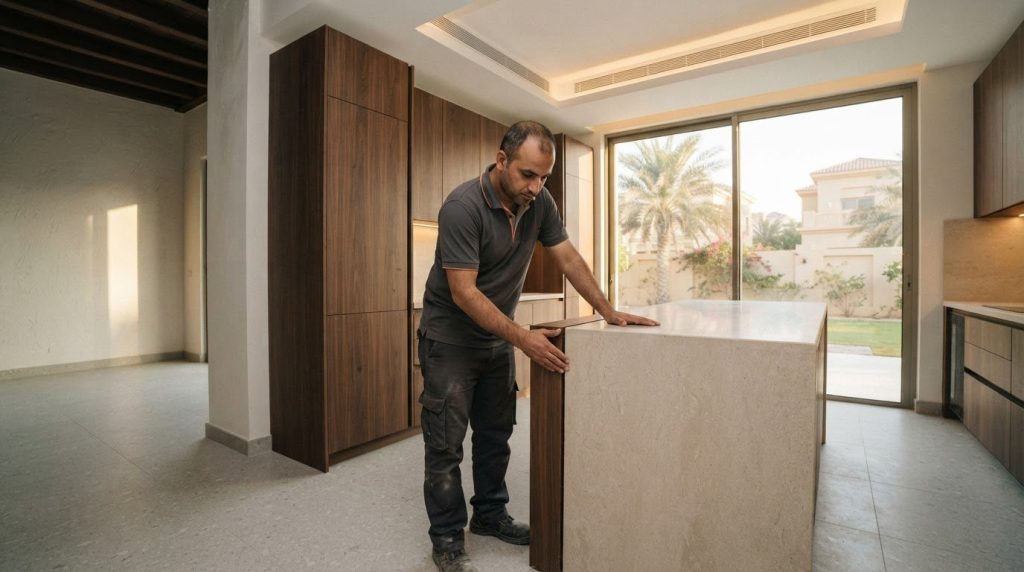
In a high-end villa renovation in Dubai, the biggest cost differences often come from the scope of work, not just the finishes. Structural changes, mechanical and electrical upgrades, bespoke joinery, and the coordination required all shape the project budget.
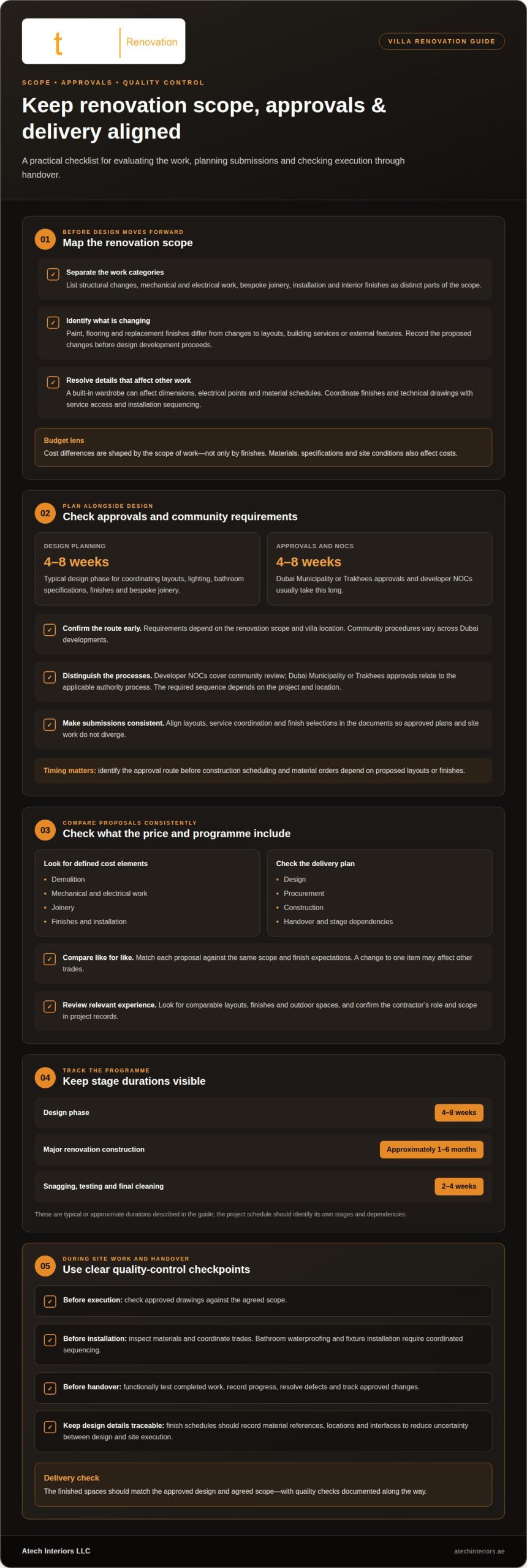
It’s reasonable to expect a premium renovation to involve both detailed design decisions and formal approvals. Developer NOCs and Dubai Municipality or Trakhees approvals usually take 4-8 weeks, so approval planning is an important part of the programme, not an administrative afterthought.
This guide explains which decisions affect project costs, when approvals and community NOCs may be required, and how to assess a contractor’s planning, coordination, and quality-control process. It also covers practical checks for keeping the approved design, site work, materials, and finished spaces aligned, so you can define the scope and assess delivery more clearly.
Key Takeaways
- Separate structural, mechanical and electrical work from interior finishes to understand what drives the renovation scope and budget.
- Plan approvals and community NOCs alongside design development so compliance requirements are considered before work begins.
- Assess contractors by how they coordinate trades, materials, site execution and quality checks, not by appearance alone.
- Compare renovation proposals against the same scope and finish expectations to identify gaps and maintain control through project delivery.
Do I Need Approval for Villa Renovation in Dubai?
Approval depends on the renovation scope, the property’s community requirements, and whether proposed work affects regulated elements. Interior changes such as paint, flooring, or replacement finishes differ from alterations to layouts, building services, or external features. Before design development proceeds, the project team should map the proposed work against Dubai Municipality and community requirements, then identify which submissions apply.
Design planning gives these decisions a practical starting point. A Dubai villa renovation design phase typically takes 4-8 weeks, allowing time to coordinate room layouts, lighting, bathroom specifications, finishes, and bespoke joinery. For example, a built-in wardrobe affects dimensions, electrical points, and material schedules, so it should be resolved before fabrication and installation.
A luxury villa’s design and fit-out must also align with technical drawings. Stone bathroom finishes, concealed storage, and custom timber wall panels can affect waterproofing, service access, and installation sequencing. Clear finish schedules record material references, locations, and interfaces, reducing uncertainty between the design and site execution.
Turnkey design-and-build project management connects decisions from concept through delivery. The project team coordinates design documents, approval submissions, procurement, trades, and site inspections against an agreed scope. This is especially useful when bespoke joinery, lighting, flooring, and mechanical services need to be installed in sequence rather than managed as separate packages.
Energy-efficiency and sustainability choices may include LED lighting, efficient cooling controls, water-saving bathroom fixtures, and durable materials selected for long-term use. Smart-home planning can coordinate lighting, shading, climate controls, and security systems, with the final specifications matched to the villa’s services and occupants’ needs.
A turnkey villa interior design process typically moves through a measured assessment, concept design, detailed specifications, approvals, procurement, installation, and handover. Each stage has a defined output, such as coordinated drawings, finish schedules, required approval submissions, and documented execution checks. This sequence helps keep design decisions, authority requirements, and completed interiors aligned.
Contractor selection and project quality control
When choosing a contractor for a Dubai villa renovation, look for a clear scope, schedule, and quality-control process alongside relevant project experience. Compare how each team handles design coordination, site execution, and handover.
Renovation Experience and Portfolios
A relevant portfolio shows how a contractor has handled comparable layouts, interior finishes, and outdoor spaces. Look for completed projects with rooms and systems similar to yours, rather than judging by visual style alone. Jumeirah villas, for example, may have different layouts and community requirements from other properties. Project records should clearly state the contractor’s role and scope of work.
Pricing Transparency and Timelines
A transparent proposal breaks the work into defined elements, such as demolition, mechanical and electrical work, joinery, finishes, and installation. This helps you understand how a change to one item may affect other trades. Costs depend on scope, materials, specifications, and site conditions; Atech Interiors provides a custom quotation after assessing the project. The timeline should identify design, procurement, construction, and handover stages, including their dependencies.
Project Stages and Quality Control
A major villa renovation may take approximately 1-6 months for construction, while snagging, testing, and final cleaning add 2-4 weeks. A managed programme links each stage to defined checks: approved drawings before execution, material inspections before installation, and functional testing before handover. For example, bathroom waterproofing and fixture installation require coordinated sequencing. A turnkey team should record progress, resolve defects, and track approved changes so the finished spaces match the agreed scope.
Before committing, align the proposal with the required finishes, project stages, and quality records. Review renovation project planning as part of defining a controlled delivery approach.
Dubai villa renovation permits and community NOCs
Approval requirements depend on the renovation scope and the villa’s location. Dubai Municipality or Trakhees approvals and developer NOCs usually take 4-8 weeks. The approval route should therefore be identified during project assessment, before construction scheduling and material orders depend on proposed layouts or finishes.
Start by listing the intended changes. A kitchen redesign, bathroom alterations, and revised internal layouts may involve different technical considerations from changes to the villa’s exterior. The project team maps each item against the relevant authority and community process, then prepares coordinated submission documents. This helps distinguish design decisions from approval requirements.
Community procedures vary across Dubai developments, so a villa in one community may follow a different submission process from a property elsewhere. Developer NOCs cover the community’s review, while Dubai Municipality or Trakhees approvals relate to the applicable authority process. The required sequence depends on the project and location, so coordination should account for both processes where necessary.
Plan submissions around the actual scope. For example, a revised kitchen layout should align with service coordination and finish selections, while a proposed exterior change should be clearly identified in the design documents. Accurate, consistent information gives reviewers a coherent proposal and helps prevent discrepancies between approved plans and site work.
Once submissions are underway, align procurement and construction planning with approval milestones. Schedule bespoke furniture, finish orders, and trade work around the reviewed scope, rather than assuming the design has been accepted. If plans change, the project team should assess whether the revision affects submitted documents and adjust coordination accordingly. This approval-led sequence supports a more controlled renovation programme across Dubai communities.
Dubai villa renovation company comparisons
Compare renovation proposals against the same residential scope, not just the headline total or presentation. For each property, align the room schedule, material specifications, authority coordination, and handover requirements. This reveals differences in delivery approach and whether interior and exterior work have been addressed consistently.
Use a scope matrix to compare what each proposal includes. A villa with living areas, bathrooms, a kitchen, and outdoor spaces needs coordinated trades and clear boundaries between them. For example, check whether landscape interfaces, exterior finishes, lighting, and internal joinery are documented together. Omissions can change the work required once the project begins.
Assess how the project will be managed, from initial assessment through execution and handover. A controlled process assigns responsibility for drawings, approvals, procurement, trade sequencing, site inspections, and defect resolution. Compare these steps directly, including how revisions are recorded and completed work is checked against specifications. Focus on defined outputs, not broad claims such as “full service.”
Design suitability matters as much as delivery controls. A family prioritising open-plan living may need a different layout from owners seeking private work areas or guest accommodation. Compare how each proposal responds to the intended lifestyle, circulation, storage, and connection between interior and outdoor spaces. Jumeirah is one Dubai community where a villa’s setting can inform design choices, while approval requirements remain specific to the project.
Finally, review the schedule and commercial structure together. The proposal should connect milestones to design decisions, procurement, site work, and handover, while explaining how scope changes affect cost and timing. Price depends on scope, materials, specifications, and site conditions, and is provided after a quote request. A like-for-like comparison helps identify the approach that best aligns design intent with controlled execution. Discuss your villa renovation scope to establish a coordinated basis for planning.
Atech Interiors: Renovations
Atech Interiors LLC can support a villa renovation that requires coordinated interior work and Dubai Municipality approvals. Its Renovation and Interior & Fit-Outs services cover project planning, technical compliance, and execution across the spaces included in the agreed scope.
Involve Atech Interiors LLC while defining renovation requirements, preparing approval submissions, or aligning interior specifications with site work. This is especially useful when layout, finish, or building-services changes need to be considered alongside approval requirements. A clear scope helps establish the work and coordination the project needs.
For a high-end villa renovation Dubai, an organised process from design decisions through approvals and fit-out helps keep project requirements aligned. Contact Atech Interiors LLC to discuss your villa renovation.
Set the Direction for Your Renovation
Start by turning your design priorities into a clear project brief. Identify the spaces that matter most, how the villa needs to support daily life, and which decisions must be made before work begins. This gives the project team a practical basis for defining the scope and coordinating the work.
Atech Interiors supports villa renovations through its Interior & Fit-Outs and Dubai Municipality Approvals services, with the work tailored to the project requirements. Its Office Fit-Out service is designed for workplaces; for a home renovation, planning can focus on your interior and intended outcome.
With the priorities defined, you can move from ideas to a coordinated renovation plan. For a high-end villa renovation in Dubai, a clear brief helps connect design intent with practical delivery. Contact Atech Interiors to discuss your renovation and take the next step with a defined direction.
Frequently Asked Questions
What Affects Villa Renovation Cost?
Defining what will be retained or replaced can change the work required. Keeping serviceable cabinetry and replacing its doors, for example, differs from removing and rebuilding the entire installation. A clear schedule should state what stays, what is removed, and what will be supplied. This reduces ambiguity during specification and helps prevent assumptions from becoming unplanned changes during delivery.
How long will my villa renovation take from design to handover?
The overall duration depends on the project. A useful programme makes decisions visible alongside construction milestones. For example, finalise selections that affect several rooms before releasing the related work for execution. Atech Interiors plans timelines according to project size and complexity. The programme can also show when an owner’s pending decision affects a later activity, helping the team coordinate progress.
What Are the Steps in a Professional Villa Renovation?
A professional process turns the owner’s priorities into coordinated design information before site work begins. It can include a measured assessment, layout development, material specifications, and a 3-D walkthrough to help visualize the proposal before execution. The team then aligns the agreed scope with applicable submissions and delivery planning. At handover, documentation and a review of completed spaces help close out the project clearly.
Why Remodel Your Luxury Villa in Dubai?
Remodelling can address specific shortcomings in an existing home, such as limited storage, poorly used rooms, or finishes that no longer suit the owner. It also allows related interior decisions to be considered together, rather than updating one room without considering adjoining spaces. A clear brief identifies the most important improvements and keeps design choices focused on how the property will be used.
What is the average cost per square foot for a high-end villa renovation in Dubai?
A per-square-foot average can mislead if the compared projects do not include equivalent spaces and work. One proposal may cover only interior areas, while another includes additional scope or bespoke elements. Atech Interiors provides a custom, project-specific quotation after assessing the requirements. For a useful comparison, check that each quotation uses the same measured area and describes the same included work.
What factors affect luxury villa renovation costs in Dubai?
Room-by-room specifications can change the work involved. A standard-size vanity, for instance, requires different design coordination and installation from a custom-fitted piece. The same applies to distinctive surface materials or joinery made for a particular space. Record these choices in the project brief to clarify the scope before requesting quotations.