
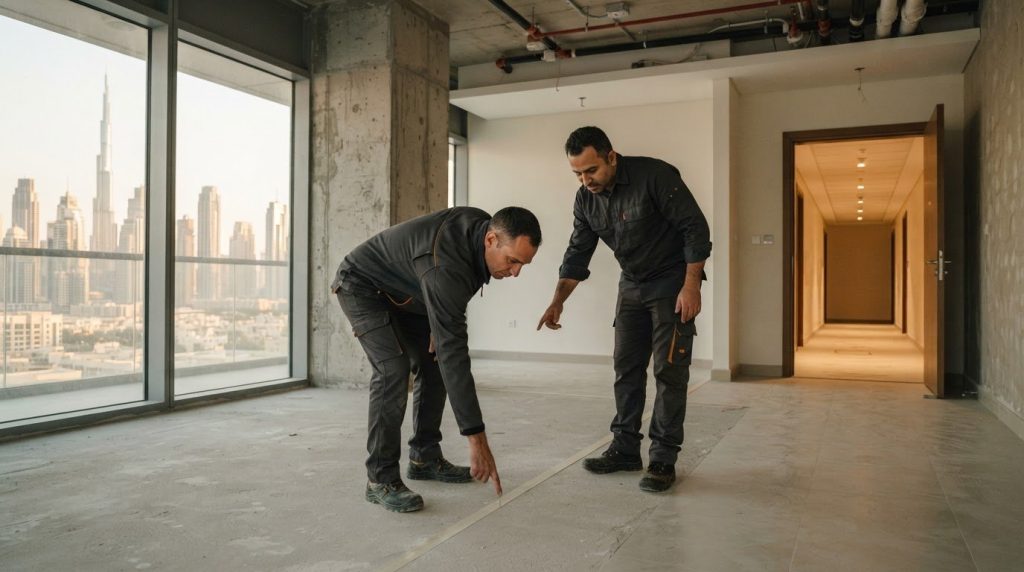
A minor renovation in Dubai isn’t automatically permit-free: painting and loose finishes may not need a Dubai Municipality permit, while work affecting partitions, structure or building services can require formal approval. To understand how to get renovation permits in Dubai, first identify the work involved and the authority responsible for the property; apartments may also require a building or community NOC before work begins.
A small interior change may seem straightforward, but the approval route depends on what the work alters and where the property is located. To understand how to get renovation permits in Dubai, start by defining the scope and coordinating the required drawings and submissions with a fit-out professional.
This guide explains how to distinguish minor finishes from work that may need approval, how Dubai Municipality permits and building-management NOCs fit into the process, and which documents and review stages to plan for. Knowing how to get renovation permits in Dubai helps you coordinate approvals with the project schedule before work begins.
Key Takeaways
- Classify the planned work by whether it changes structure, building services or only finishes to identify the likely approval route.
- Prepare the required drawings and property documents through a renovation permit professional before submitting an application.
- Build approval time into the schedule, as review stages vary with project scope, authority and community NOC requirements.
- Identify whether Dubai Municipality, a free-zone authority or building management must approve the work before construction begins.
Do I need a permit for minor renovations in Dubai?
Painting walls, changing curtains, replacing loose furniture, and fitting carpets or rugs are listed as work that does not require a permit. Structural changes, electrical or plumbing work, built-in fixtures, and some partitions may require approval. Apartments may also need a building or community NOC. The property, scope, and governing authority determine the approval route.
Contractors should be appropriately licensed. Dubai Municipality has procedures for certifying and registering design and building contractors. Insurance requirements depend on the project and site, so coordinate applicable documents with the application and building-management submission. Community or building rules set work hours and noise conditions; include these restrictions in the construction schedule.
- Classify the scope. The renovation professional separates decorative finishes from structural, electrical, plumbing, or HVAC changes. This distinction identifies whether the application needs authority approval, a community NOC, or both, before construction is scheduled.
- Establish the submission route. The professional identifies whether Dubai Municipality or the relevant free-zone authority governs the property, then checks whether building management or the Owners Association also requires an NOC.
- Prepare technical documents. Applications may require floorplans, structural drawings, electrical and plumbing designs, identification copies, a title deed or tenancy contract, and the contractor’s trade licence. Structural work may need calculations from a licensed engineer.
- Coordinate drawings. The appointed professional prepares architectural and relevant structural or MEP drawings for submission. Plans should show the proposed work clearly, including affected services and technical details needed for safety review.
- Submit online. For properties using Dubai Municipality’s Building Permit System, the professional uploads forms and documents, submits the application, and tracks its status online. The submission process provides a record of review progress.
- Plan for authority charges. Permit fees depend on the authority, project size, complexity, and any additional services. Community NOCs may also involve fees and a refundable security deposit; these are separate from the professional’s project fees.
- Allow for review and conditions. The professional responds to authority comments and coordinates any requested revisions. Approval must be received before work starts, and inspection requirements may apply during or after construction.
Renovation approval timelines
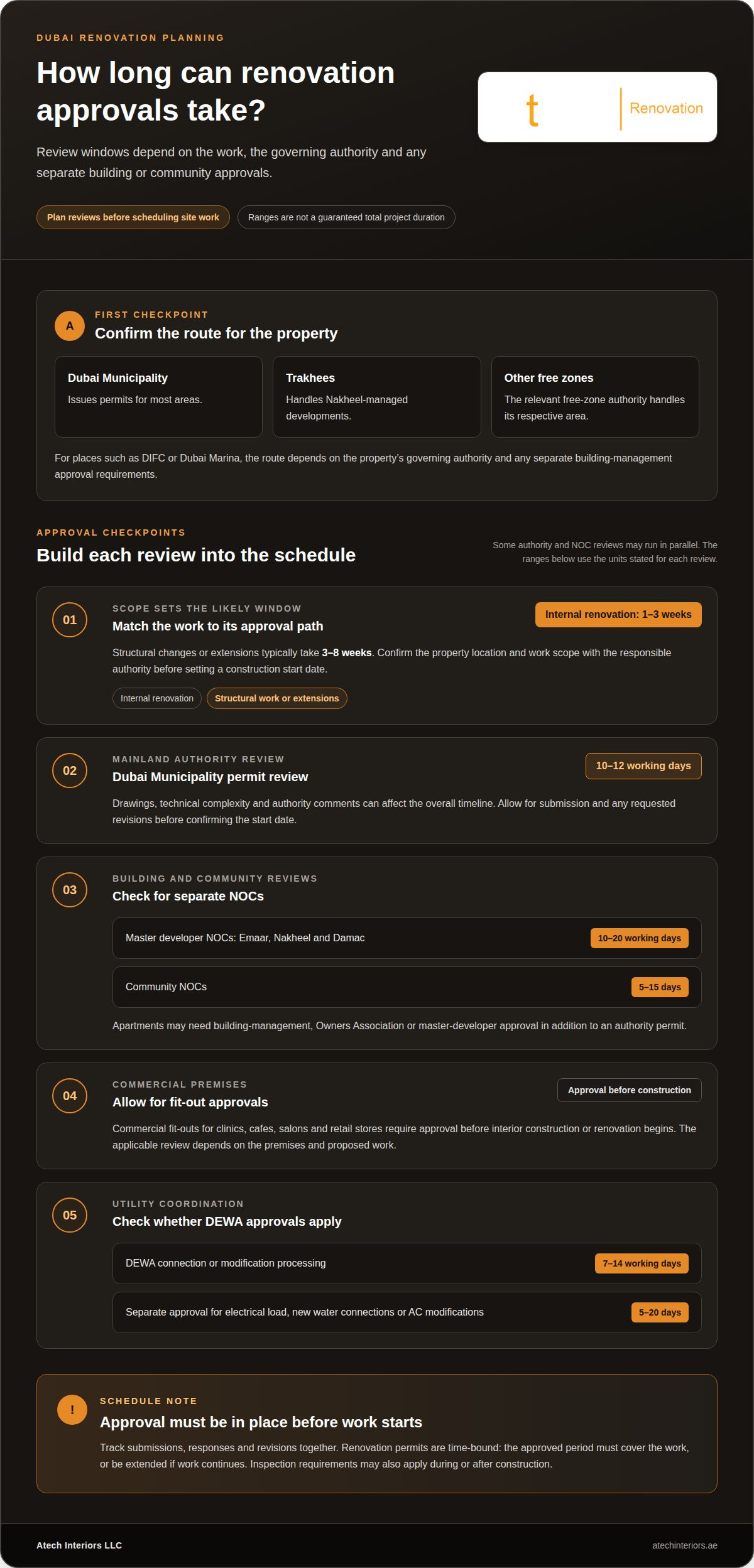
Dubai Municipality issues permits for most areas, while Trakhees handles Nakheel-managed developments and other free-zone authorities handle their respective areas. For DIFC or Dubai Marina, the route depends on the property’s governing authority and any separate building-management approval requirements.
- Confirm the authority and scope. Match the property location and proposed work to the responsible authority before scheduling construction. Internal renovation permits typically take 1-3 weeks, while structural changes or extensions typically take 3-8 weeks.
- Schedule mainland reviews. Dubai Municipality renovation permits are generally reviewed within 10-12 working days. Drawings, technical complexity, and authority comments can affect the overall timeline, so plan for submission and revisions before setting a start date.
- Allow for developer and community review. Master developer NOCs from Emaar, Nakheel, and Damac are listed as taking 10-20 working days. Community NOCs are listed at 5-15 days, making early coordination important for residential properties with separate management requirements.
- Include commercial approvals. Commercial fit-outs for clinics, cafes, salons, and retail stores require approval before interior construction or renovation begins. The professional coordinates the relevant authority route and drawings, then accounts for any additional review tied to the premises or proposed work.
- Sequence DEWA applications. DEWA connection or modification processing is listed as taking 7-14 working days. Electrical load changes, new water connections, or AC modifications may require separate approval, listed as taking 5-20 days.
- Build a joined-up timeline. Track each submission, response, and revision in sequence, since parallel NOC and authority reviews can affect the planned start. Renovation permits are time-bound, so the approved period must cover the work or be extended if work continues. For coordinated renovation approval support, align drawings and submissions before booking site activities.
Building management and developer NOCs
Building-management and developer NOCs may be required alongside authority permits. A renovation professional can identify the relevant parties and coordinate submissions before site work begins.
Identify the required NOC providers for your renovation
Start by mapping the property’s approval route. For an apartment, this may involve building management, an Owners Association, or the master developer, depending on the community. The renovation scope and property location determine which NOCs apply. Include facade, window, and boundary-wall changes from the outset, as they require approval and developer approval.
Request developer and building management NOCs for your renovation
Coordinate applicable NOC requests with the developer or building management. For a leased property, the request requires the tenancy contract and the owner’s written consent. Align the submitted scope with the proposed renovation and provide any required supporting documents. This helps avoid mismatches between the NOC request, later permit submissions, and the planned work.
Secure the required fire safety NOCs for your renovation
Include a Civil Defense NOC route if the project involves fire suppression systems, emergency exits, or public gatherings. Identify these elements in the renovation scope and coordinate the fire-safety submission with other required approvals. Keep changes to exit routes and suppression systems clear in the project documentation so the proposed work can be assessed as one coordinated plan.
Dubai Municipality building permits
For mainland properties, Dubai Municipality building permits cover renovation, modification, and maintenance. The application and technical drawings must match the planned work, and any required inspections must be completed.
- Confirm the authority. For mainland villas, apartments, and commercial units, identify whether Dubai Municipality governs the property. Trakhees and other free-zone authorities handle their respective areas, so establish jurisdiction before preparing permit drawings or scheduling construction.
- Define the proposed changes. Structural modifications, MEP work, and major technical alterations require approval from the relevant local authority. Record changes to walls, electrical systems, plumbing, or HVAC accurately, because the submission must reflect the intended construction scope.
- Prepare coordinated plans. Have a licensed professional prepare architectural drawings and relevant structural and MEP layouts. Structural changes may require engineering calculations from a licensed engineer, while material specifications and fire ratings may be included where relevant.
- Submit through the correct system. Dubai Municipality applications for the properties described use its Building Permit System and are reviewed against the Dubai Building Code. The professional submits the application and supporting documents, then responds to authority comments with coordinated revisions.
- Address special project conditions. A villa extension exceeding 10 sqm requires a Dubai Municipality building permit. Demolition requests also require approval to ensure the work will not affect neighbouring properties. These scope details should be identified before submission.
- Coordinate inspections and closeout. Renovation work may be inspected while underway to check alignment with approved plans. After completion, a final inspection checks the work against those plans; sign-off follows, and the permit is closed.
For support coordinating Dubai Municipality approval applications, align the technical scope, drawings, and inspection stages before work begins.
Atech Interiors: Renovations
Atech Interiors LLC coordinates design and permit approvals for renovation projects in Dubai. Its Renovations and Dubai Municipality Approvals services help align proposed interior work with the relevant submission process, from technical planning through approval coordination.
Choose Atech Interiors LLC for a home or commercial renovation that involves more than selecting finishes, such as coordinating interior fit-out requirements with authority approvals. Office Fit-Out projects can be planned alongside technical documentation and approval stages, helping keep the intended scope aligned with the work submitted for review.
Share the property type, planned work, and any drawings or approval documents already prepared to establish the project scope. Contact Atech Interiors LLC to discuss renovation planning and Dubai Municipality approvals.
Plan the renovation around a clear next step
Once you understand the approval route, connect it to the intended outcome for the property. A practical approach to how to get renovation permits in Dubai is to align the project scope, design direction, and approvals before planning construction. This keeps regulatory requirements connected to interior decisions rather than treating them as separate tasks.
Atech Interiors LLC brings renovation planning together with Interior & Fit-Outs and Office Fit-Out, supporting residential and workplace projects where technical coordination matters alongside the finished space. If you are defining a renovation scope or preparing to move from planning into delivery, discuss your renovation plans with Atech Interiors LLC. A well-coordinated next step can make the project easier to manage from initial decisions through completion.
Frequently Asked Questions
Do I need a permit for structural changes in my Dubai property?
Structural changes require approval from the relevant local authority before work begins. Removing or adding a wall, for example, can alter the property’s structural arrangement and must be shown in the submitted plans. An application affecting the structure may also require engineering calculations prepared by a licensed engineer. The property’s location determines which authority reviews the application.
Does a permit expire?
Renovation permits in Dubai are time-bound. If work continues beyond the approved period, the permit must be extended. Include its validity period in the project schedule and coordinate an extension before expiry if the programme changes. This keeps site activity aligned with the approval granted for the renovation.
Can one company handle everything from NOC to project completion?
Renovation planning, Dubai Municipality approval requirements, and project execution can be coordinated as connected workstreams. Atech Interiors provides Renovations and Dubai Municipality Approvals, alongside interior and fit-out work. Coordination depends on the property’s approval route and project scope, including any separate developer or building-management NOC. Set out these requirements before scheduling work.
Do I need a permit or NOC for painting or light renovations?
Painting walls, changing curtains or blinds, replacing loose furniture, and installing carpets or rugs are listed as work that does not require a permit. For an apartment, building management or the Owners Association may still require an NOC. Distinguish loose finishes from fixed installations or building-services work, as those changes may follow a different approval route.
What happens if I renovate without approvals?
Unauthorised renovation work in Dubai may incur fines of AED 10,000 or more. Work that departs from approved plans can also create issues during inspections, since authorities may inspect a project while it is underway and after completion. Before starting, establish the applicable approvals and keep site work aligned with the accepted scope to reduce compliance risks.
How does a professional apply for a Dubai renovation permit, step by step?
A professional first identifies the authority and approval route, then coordinates the required drawings and supporting documents. The application is submitted through the relevant system, such as Dubai Municipality’s Building Permit System for applicable properties. The professional tracks the review, responds to comments with any necessary revisions, and coordinates required inspections. A final inspection checks completed work against approved plans before sign-off.