
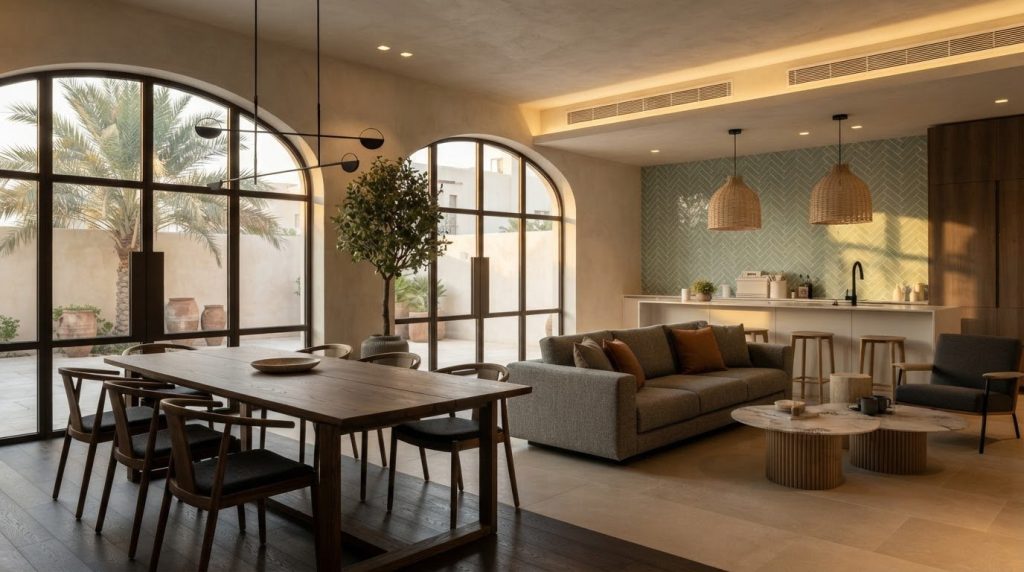
A complete villa renovation in Dubai is measured in months, not weeks: a full structural project can take 6 to 18 months, depending on the villa’s size and scope. Community and municipality approvals typically take 4-8 weeks and can run alongside design, helping the project move forward in stages.
It’s reasonable to expect the timeline and budget to change with the extent of the work. A full villa refurbishment in Dubai may involve interior finishes, kitchens and bathrooms, mechanical services, outdoor areas or structural changes, and each element affects the scope of planning and delivery.
This guide explains what refurbishment can include, how the property and scope affect a project quotation, and which approvals may apply. It also outlines the main project stages and factors that shape the schedule, helping you make informed decisions about the work.
Key Takeaways
- Map the refurbishment scope from space planning and structural changes through interior finishes and outdoor upgrades, since each workstream affects sequencing.
- Allow for a multi-stage programme: a full structural renovation can take 6 to 18 months, while approvals may run alongside design.
- Identify community NOC and authority approval requirements early, particularly where the work involves structural changes.
- Assess costs by villa size and scope, with structural upgrades and kitchen or bathroom modernisation among the major cost drivers.
What is Included in Villa Renovation Services?
A villa renovation can combine layout changes, structural repairs, and new finishes. The scope depends on the existing property and the areas you want to improve.
Architectural Planning and Structural Scope
Start by reviewing the existing layout, circulation routes, and intended use of each room. For example, a family might reconfigure a ground-floor living area to connect the kitchen, dining space, and garden access. Architectural drawings set out the proposed arrangement before structural work or finish selections proceed.
Removing a load-bearing wall requires structural assessment and a reinforcement design, such as a beam that transfers loads to supporting elements. Villa extensions and other structural modifications also change the building’s configuration, so the design must coordinate the new work with the existing structure. Plan cosmetic updates, such as repainting or replacing finishes, separately from structural repairs to keep the scope clear.
Approvals and Community NOCs
In Dubai, structural changes to villas require Dubai Municipality approval. Most gated communities also require a No Objection Certificate from the master developer before renovation work begins. A Jumeirah villa extension, for example, may involve both structural approval and the community’s NOC process. Approval drawings should match the proposed work, including wall changes, reinforcement, and extension details.
Project Steps and Site Requirements
A full refurbishment typically progresses from site assessment and space planning to drawings, approvals, structural work, repairs, and finishing. The sequence matters: complete reinforcement and repairs before decorative finishes, and coordinate kitchen and bathroom installations with their service connections. The schedule should also account for site access, material deliveries, and construction waste removal.
Waste disposal, working hours, and noise conditions depend on the community’s site requirements and approval conditions. Include them in the site plan before work begins so the project team can coordinate waste removal and noisy activities with the refurbishment sequence.
How long does a complete luxury villa renovation typically take in Dubai?
A full structural villa renovation in Dubai can take 6 to 18 months, depending on the property’s size and scope. Cosmetic upgrades generally take less time than structural enhancements. Interior and exterior packages also affect sequencing: bespoke joinery, flooring, lighting, façade work, and garden improvements involve different trades and installation stages.
For example, a luxury residential renovation may coordinate fitted wardrobes and kitchen joinery with flooring and lighting installation. Interior design and decoration decisions shape the finish schedule, while exterior work such as landscaping or pool upgrades adds separate site activities. Turnkey planning brings design decisions and construction coordination together, helping align these workstreams with the approved scope.
Renovation and rebuilding costs are not directly comparable without a defined scope. Retaining the existing structure and upgrading selected spaces differs from replacing the building. Structural repairs, layout changes, and finish selections also affect the project estimate. Atech Interiors provides a custom quotation after assessing the property and scope.
A practical contractor assessment considers relevant renovation experience, a coordinated work programme, and clear responsibility for design, approvals, site execution, and handover. For structural changes or general fit-out, verify that the required engineering, design, and project management licences are in place.
A written contract should define the scope, materials, project stages, payment milestones, exclusions, and handover process. It should also state any warranty coverage and explain how defects are reported and addressed. Do not assume warranty terms or duration; they should be set out in the contract.
For a coordinated interior scope, interior and fit-out planning can align design selections with the refurbishment programme and site requirements.
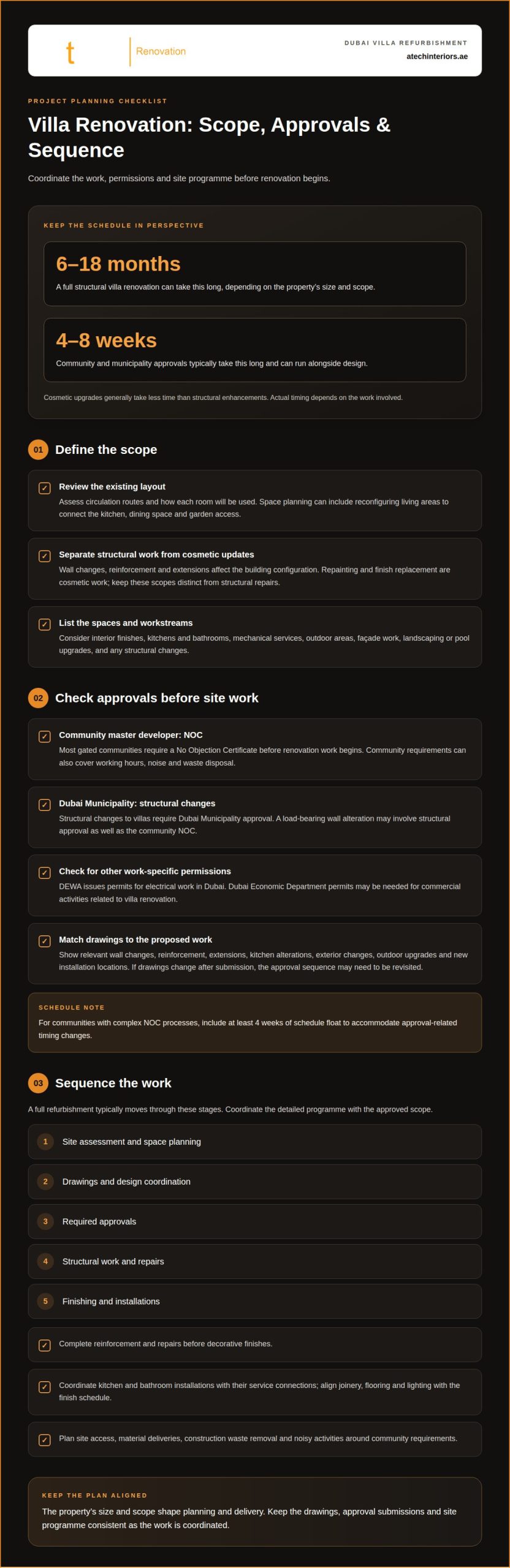
Developer NOCs and authority approvals
Villa refurbishment in Dubai can require separate approvals from the community’s master developer and relevant authorities. Most gated communities require a No Objection Certificate (NOC) before renovation work begins. Structural changes to a villa may require additional approvals, depending on the scope and applicable requirements.
These approvals serve different purposes. A developer NOC covers work within the community, while Dubai Municipality approval applies to structural changes. For example, altering a load-bearing wall may require structural approval as well as the community’s NOC. Cosmetic changes such as new finishes may follow a different process, depending on the work and community requirements.
Plan approvals while developing the design. Drawings should reflect the proposed work, including kitchen alterations, exterior changes, outdoor upgrades, and the location of new installations. If the drawings change after submission, the approval sequence may need to be revisited. Aligning the project scope with submitted plans helps prevent avoidable coordination issues.
Community and municipality approvals typically take 4-8 weeks in Dubai and can run concurrently with design. The project schedule should account for that review period before site work is planned. Communities with complex NOC processes should include at least 4 weeks of schedule float, allowing the programme to accommodate approval-related timing changes.
Specific work may require other permissions. DEWA issues permits for electrical work in Dubai, while permits from the Dubai Economic Department may be needed for commercial activities related to villa renovation. Identify applicable requirements for the planned work before installation begins.
A practical sequence is to define the refurbishment scope, prepare coordinated drawings, identify community and authority submissions, and align site activities with approvals. For a kitchen upgrade with exterior work, separating structural changes from finish selections makes the approval scope easier to track. Keep drawings, work descriptions, and the construction schedule aligned to the same project scope.
Villa refurbishment costs by size and scope
In Dubai, villa refurbishment budgets depend on floor area, existing condition, and the work included. A 3-bedroom villa measuring 2,000-3,000 sqft differs in scale from a 4-bedroom property measuring 3,000-4,500 sqft. A 5-bedroom luxury villa measuring 5,000+ sqft may also require more extensive design coordination, engineering, and custom finishes. These size examples help frame scope, but bedroom count alone doesn’t determine the project budget.
Project cost depends on the property and scope, and Atech Interiors provides a custom quotation after assessment. Factors include villa size, existing condition, layout changes, structural work, materials, and finish selections. A cosmetic update to a bathroom and flooring differs from work involving structural modifications, custom joinery, and multiple rooms. Compare defined scopes rather than broad labels such as “premium” or “full refurbishment.”
Structural upgrades and kitchen or bathroom modernisation can form a substantial part of a villa renovation scope. For a property in Palm Jumeirah, distinguish structural engineering and repairs from selected upgrades, such as replacing kitchen finishes. Give exterior and outdoor work its own scope so it is not overlooked in the interior estimate.
Costs can change when site conditions differ from the initial assessment, concealed damage needs repair, or custom selections alter the agreed scope. A clear estimate separates defined work from provisional items and records how scope changes affect cost and timeline. For example, inspecting a bathroom before specifying new finishes can identify repairs that might otherwise emerge during installation.
To establish a workable budget, define the layout, rooms, structural changes, and finish level before requesting a quote. Atech Interiors LLC can coordinate renovation scope and approvals around those decisions. Discuss your villa renovation scope to begin aligning the work items and project requirements.
Atech Interiors LLC: Dubai Municipality Approvals
Atech Interiors supports villa renovation projects in Dubai with Dubai Municipality Approvals and coordinated interior and fit-out work. Turn to the team when your refurbishment involves structural changes that require approval or when technical compliance must align with the planned interior scope.
Atech Interiors coordinates approval requirements with renovation planning, connecting proposed work with the relevant submission process. Contact the team to discuss your villa refurbishment and approval requirements.
Set the Project Up for a Clear Next Step
A refurbishment is easier to manage when decisions become a defined scope, coordinated drawings, and an agreed sequence of work. Before moving into delivery, align the intended layout and finish choices with approval requirements and household priorities. This gives the project team a clear basis for coordinating design, technical submissions, and site activities.
For a full villa refurbishment in Dubai, bring the project requirements together: the spaces to change, structural work under consideration, and interior outcome you want to achieve. Atech Interiors LLC provides Interior & Fit-Outs, Office Fit-Out, Renovations, and Dubai Municipality Approvals to support different project needs.
Contact Atech Interiors LLC to discuss your villa refurbishment requirements and establish a practical way forward. With the scope clearly framed, you can move into the next stage with greater direction and confidence.
Frequently Asked Questions
Do You Provide Quotations For Villa Renovations?
Yes. Atech Interiors provides project-specific quotations for villa renovations after assessing the property and proposed scope. The quotation reflects the rooms involved, existing conditions, design requirements, and selected work. Updating finishes in a few rooms, for example, differs from coordinating a wider refurbishment with layout changes and technical work. A defined scope clarifies what the quotation covers before the project proceeds.
How much does a project cost?
There is no single price for every villa project. Atech Interiors prepares a custom quotation after assessing the property’s size, condition, scope, and design requirements; no generic price is published. To make the estimate useful, define the rooms included and whether the plan involves structural changes, new finishes, or MEP coordination. Changes to the agreed scope can also affect the estimate.
What Part of Villa Renovation is The Most Expensive?
Structural upgrades and kitchen or bathroom modernisation can make up a substantial part of a villa renovation scope. The work involved, installation requirements, and finish selections all affect the estimate. For instance, a kitchen redesign with significant layout changes differs from replacing cabinet finishes while keeping the existing arrangement. Separating structural work, MEP coordination, and decorative selections makes it easier to understand the project scope.
What does a full villa refurbishment in Dubai include?
A full villa refurbishment in Dubai can cover space planning, partitions, flooring, ceilings, lighting, joinery, furniture, MEP coordination, finishes, authority approvals, site execution, and handover. The actual scope depends on the project. One brief might focus on reorganising interior spaces, while another includes coordinated upgrades across several rooms. A clear scope identifies the work and materials included, aligning design decisions with execution.
How much does a full villa refurbishment cost in Dubai per square foot?
A single per-square-foot figure will not represent every villa refurbishment accurately. Floor area is one factor, but the property’s condition, structural scope, room layout, material selections, and design requirements also shape the project estimate. Two villas with similar floor areas may need different work. Use measured area as one input, alongside the specific rooms, upgrades, and technical requirements under consideration.
What factors affect villa refurbishment prices in Dubai?
Key cost factors include villa size and condition, the extent of structural work, layout changes, and finish selections. Kitchen and bathroom modernisation can also affect the scope, particularly when it involves MEP coordination or custom joinery. The estimate may change if the project scope changes after planning. Listing the rooms, identifying whether existing layouts will stay or change, and prioritising upgrades helps define the work clearly.